✈️ Handcrafted Military Aircraft Weathervane — Aviation Decor That Moves With The Wind
Buy 3+ Items, Only $5.99 Shipping & Enjoy 12% Off
Airplane Weathervane – Handcrafted Aviation Legacy for Your Garden & Home! ✈️🌿
"From Cockpit to Workshop: A Pilot’s Promise to Keep Your Skies Legendary"
Hi, I’m Tom Nicholson.
For 23 years, I flew C-130s through sandstorms in Afghanistan and blizzards over Alaska. When I retired, I missed the roar of engines and the stories etched into every aircraft. So, I chose to set up a studio specializing in making aircraft weather vanes.
Now, I forge weathervanes not just as decor – but as tributes to the planes (and crews) that shaped history.
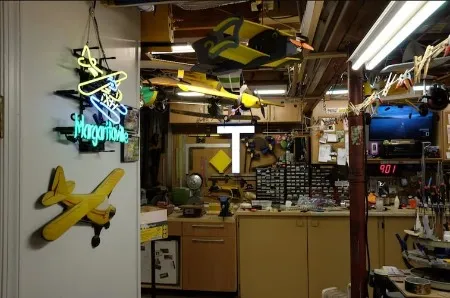
How We Produce It?
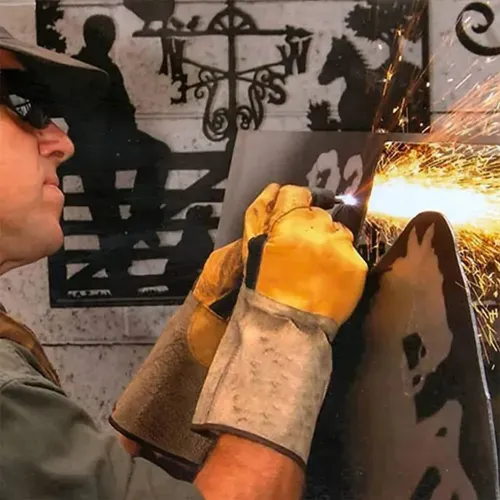
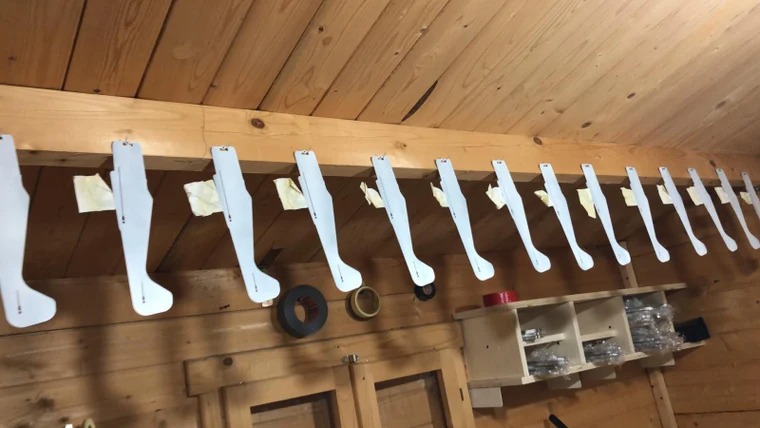
We produce all the products in our own factory with a plasma cutting machine, then the items are painted in a special oven with the powder coating.
Each model is scaled, cut, and welded by my hands – no apprentices, no shortcuts.

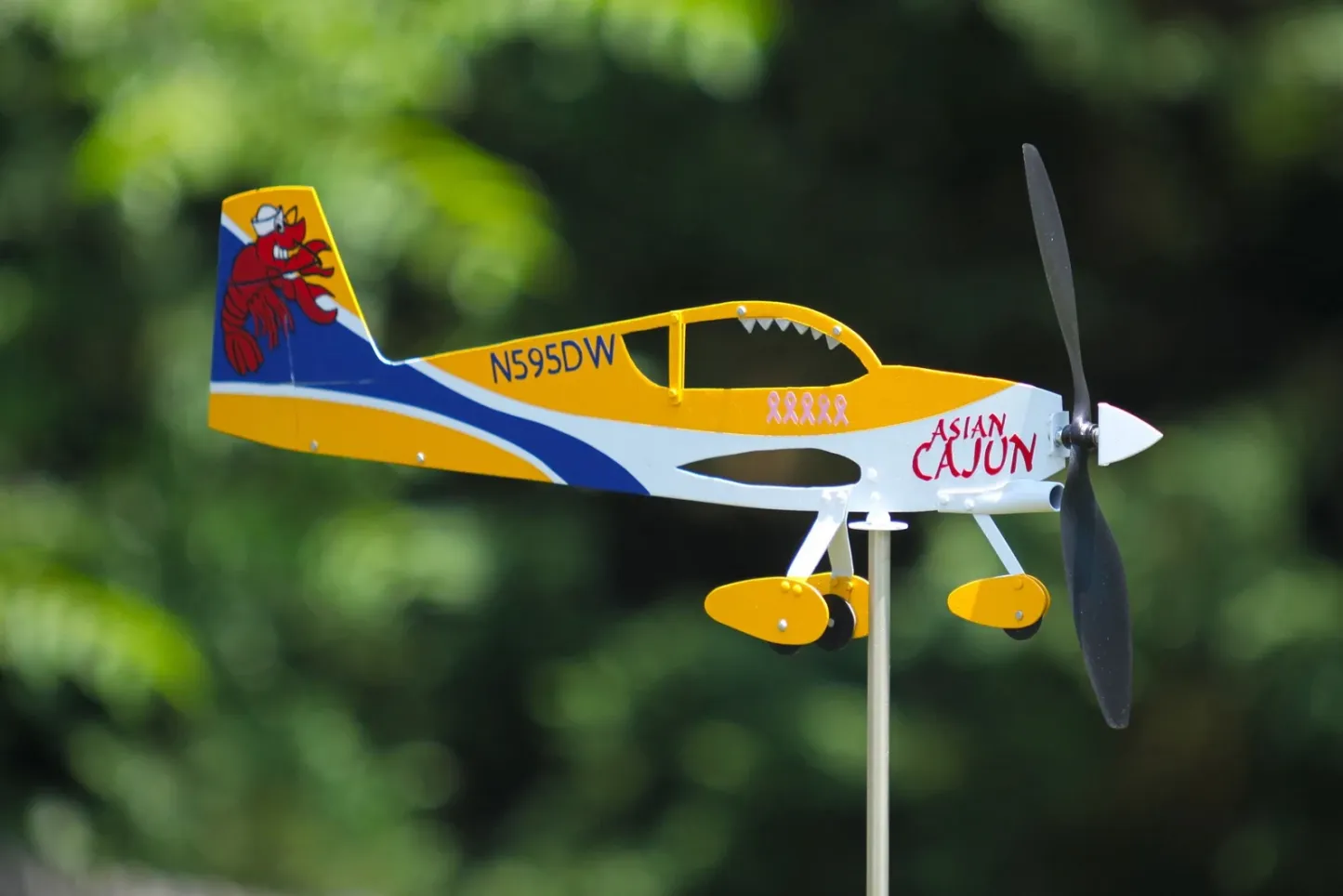
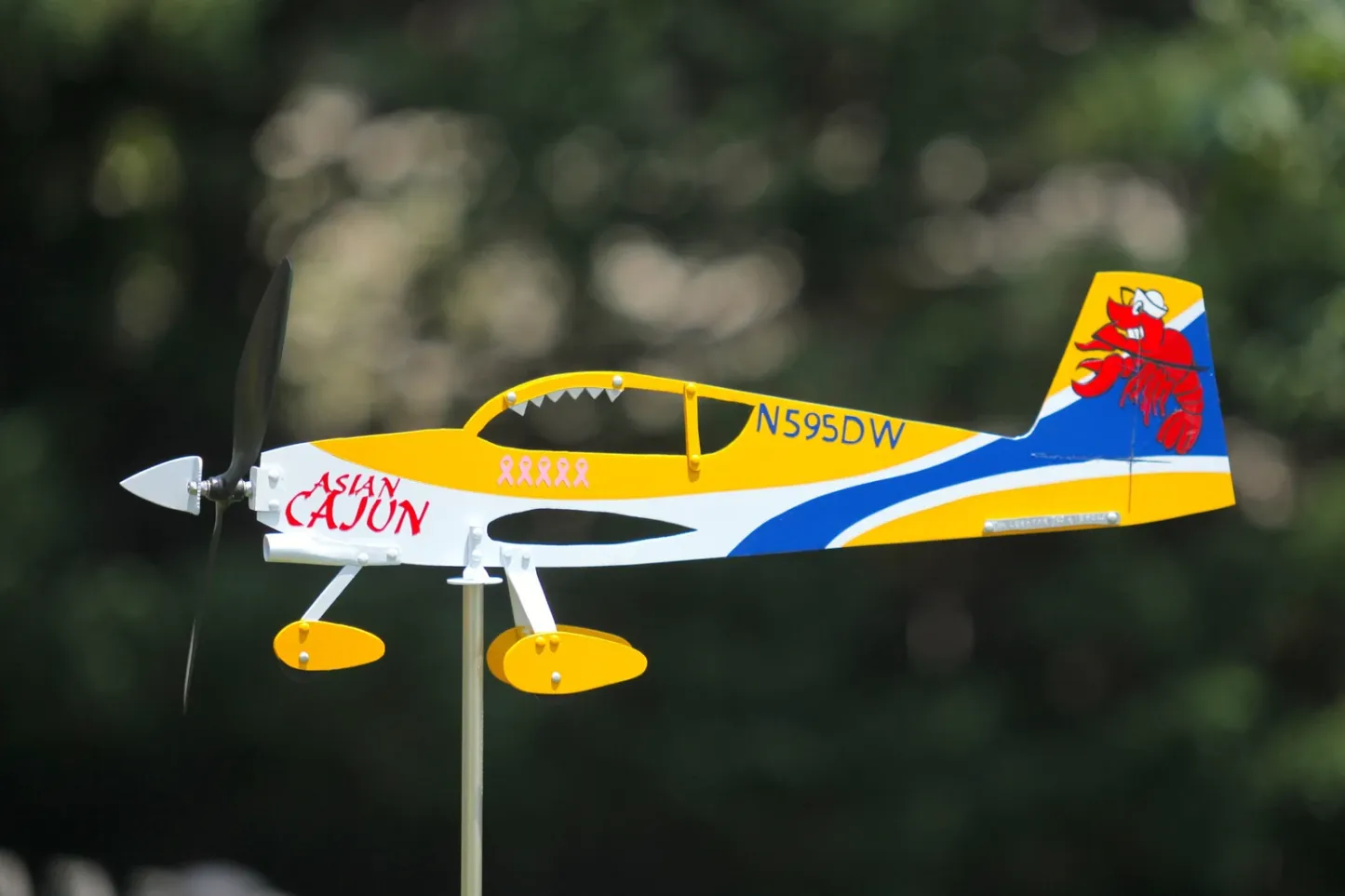
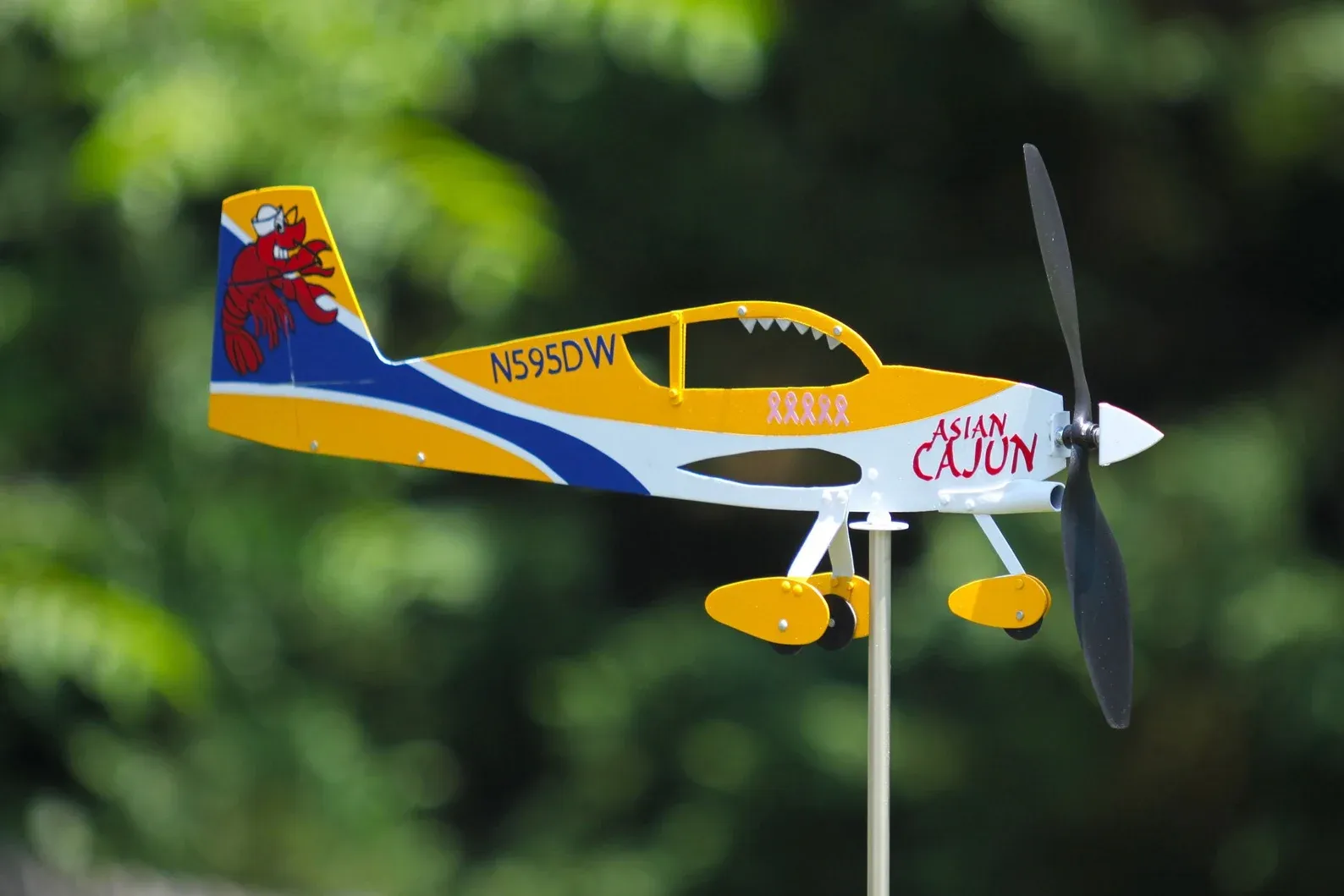
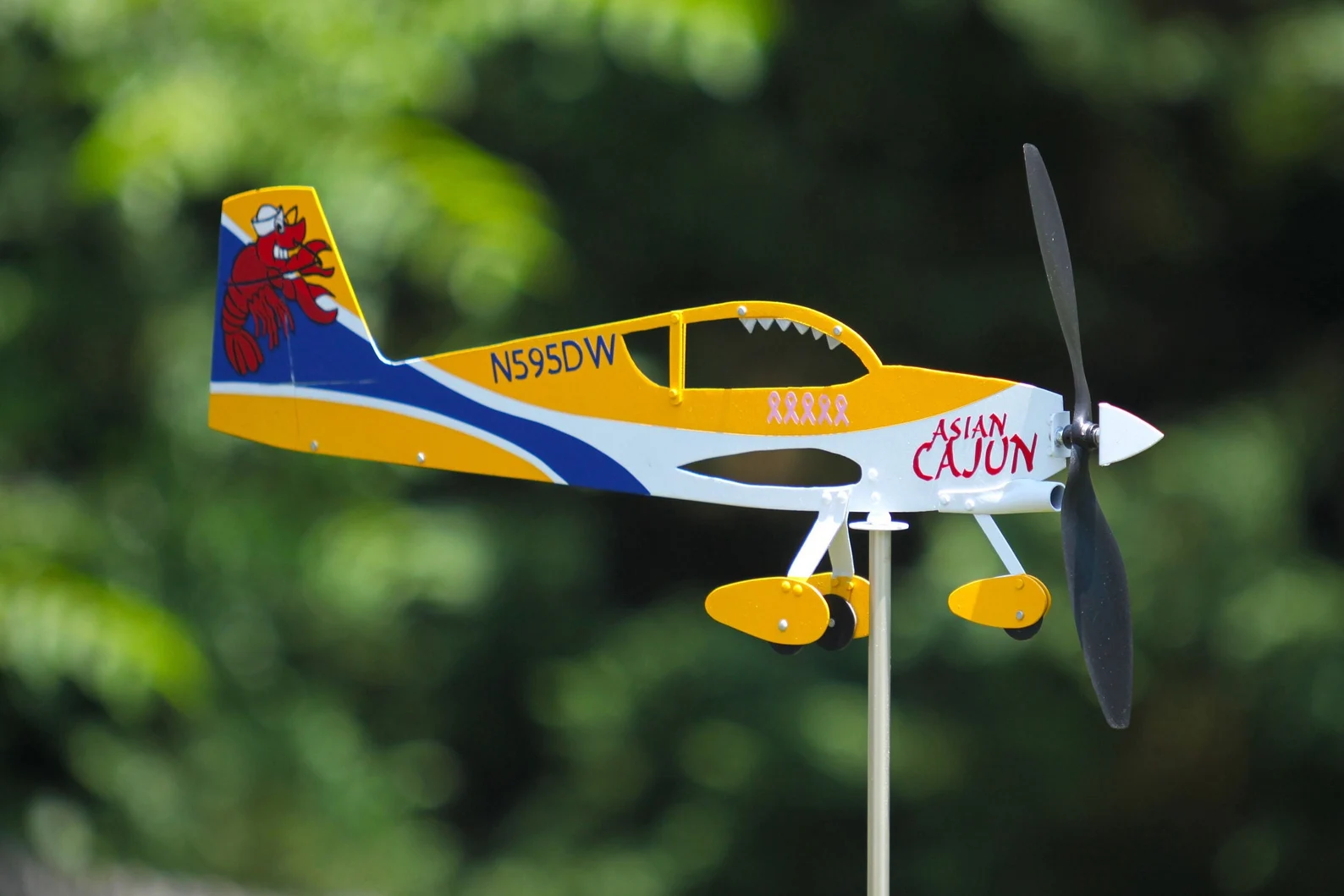
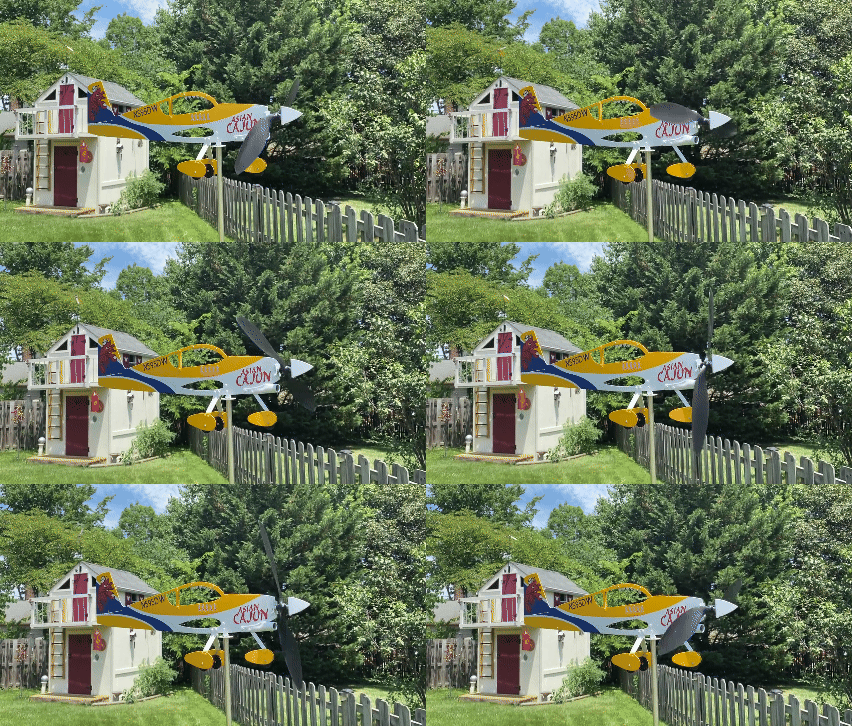
✈️ The Vans RV-9A is a two-seat, low-wing experimental aircraft designed by Van’s Aircraft for pilots who value efficiency, balance, and pure stick-and-rudder flying.
First flown in the early 2000s, the RV-9A was built with long cross-country capability in mind, offering excellent fuel economy, forgiving handling, and the kind of responsiveness that makes every flight feel personal rather than automated.Unlike military workhorses or frontline fighters, the RV-9A represents a different side of aviation history — one shaped by builders, weekend pilots, and people who fell in love with flight not as a mission, but as a lifelong pursuit. Every RV-9A carries the imprint of its builder, making no two aircraft exactly alike.
“I’ve seen RVs parked on quiet grass strips and sun-bleached ramps — hand-built, hand-flown, and deeply personal. This one doesn’t roar over cities, but it reminds me why so many of us first looked up.”Now, as a handcrafted airplane weathervane, the Vans RV-9A continues to fly — tracing the wind, marking the weather, and standing as a tribute to the freedom, craftsmanship, and joy that define homebuilt aviation.
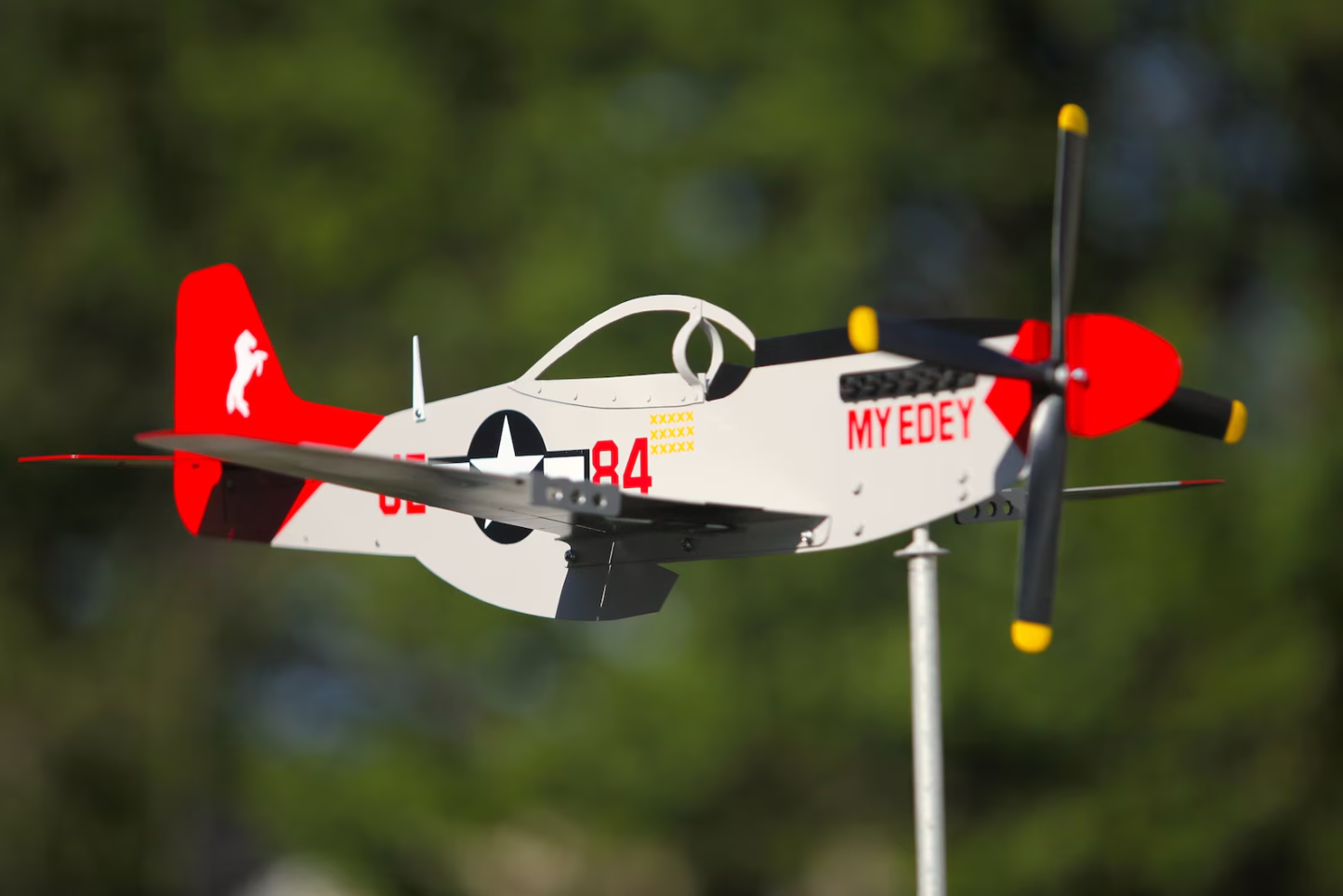
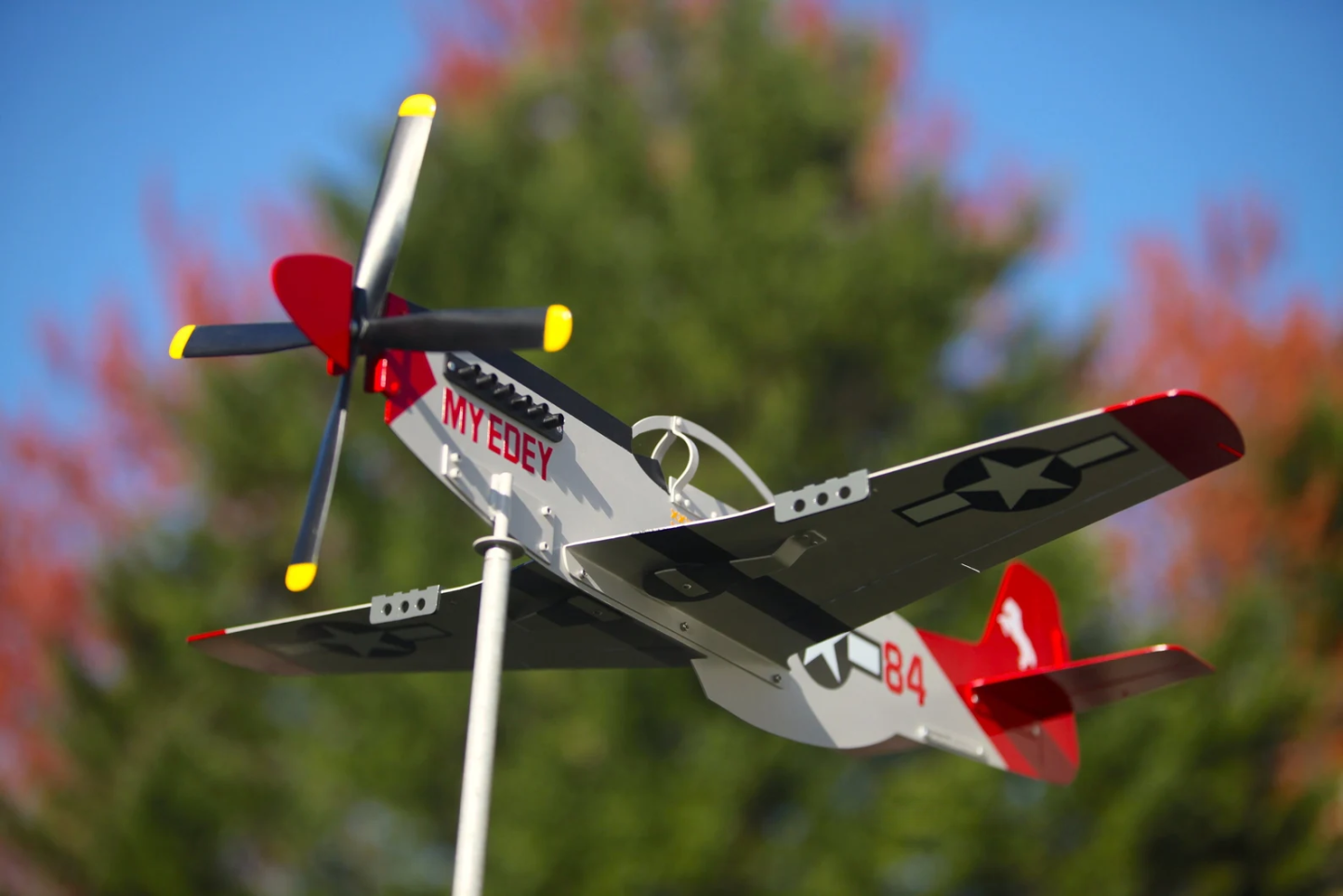
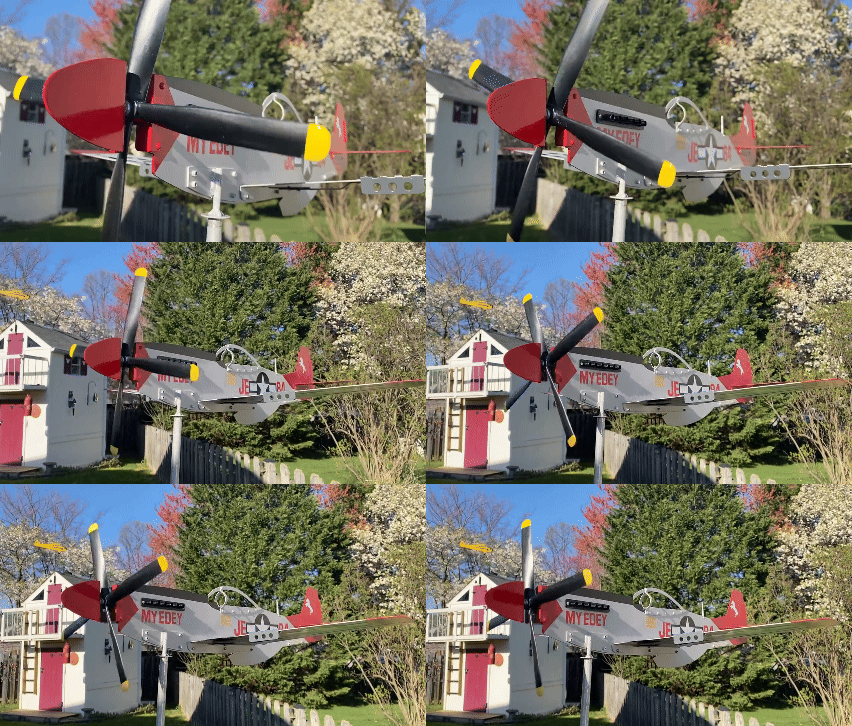
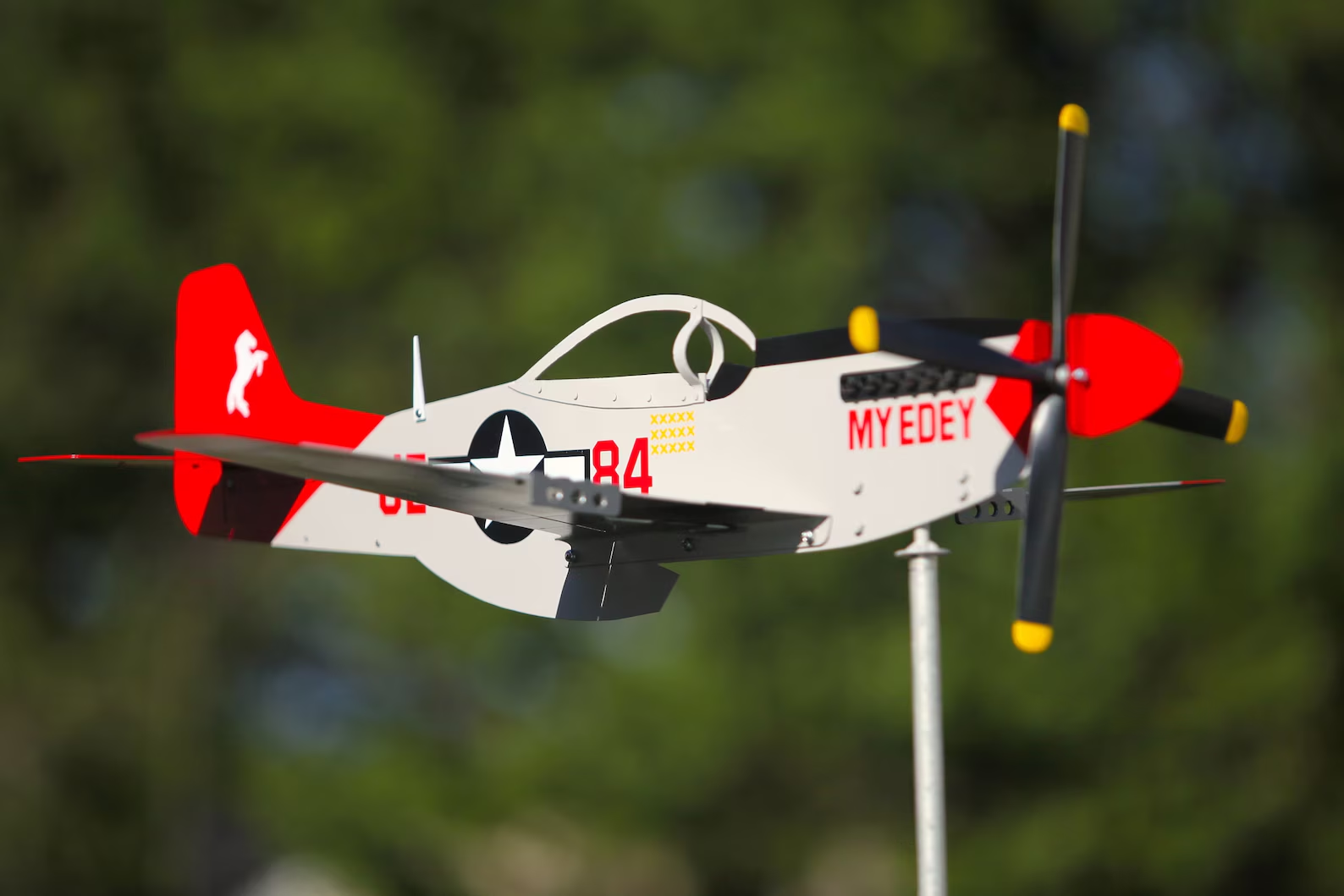
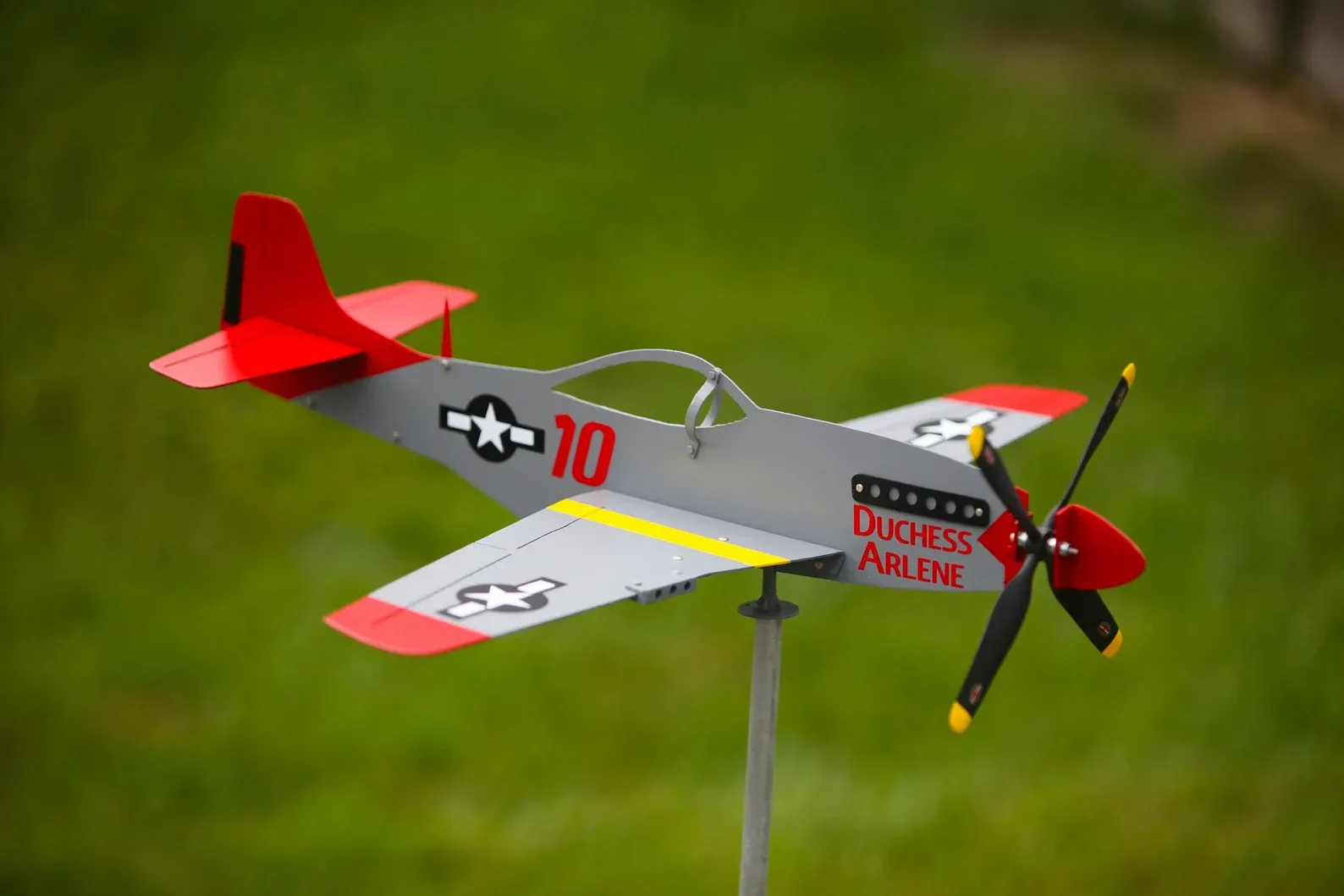
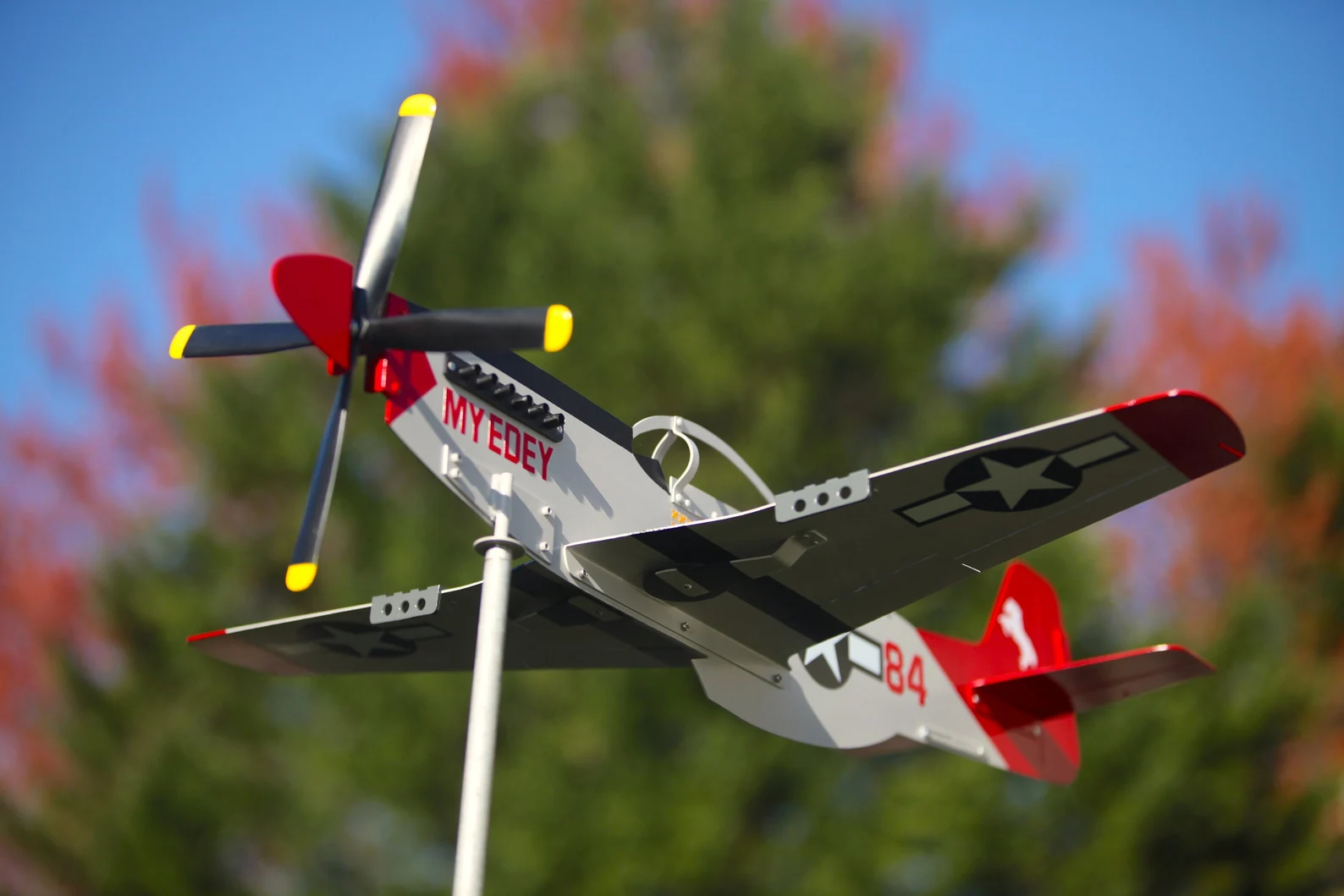
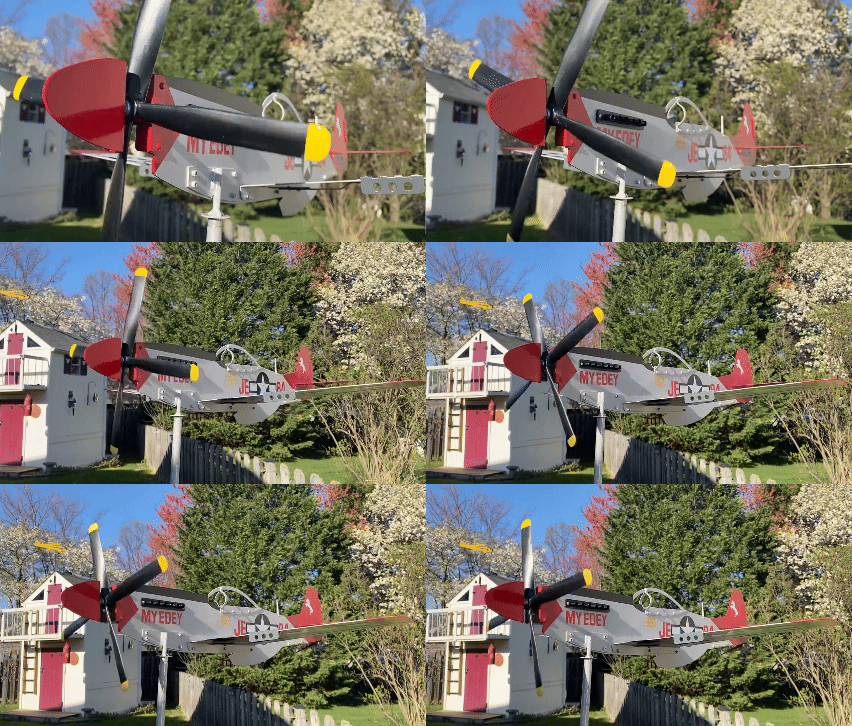
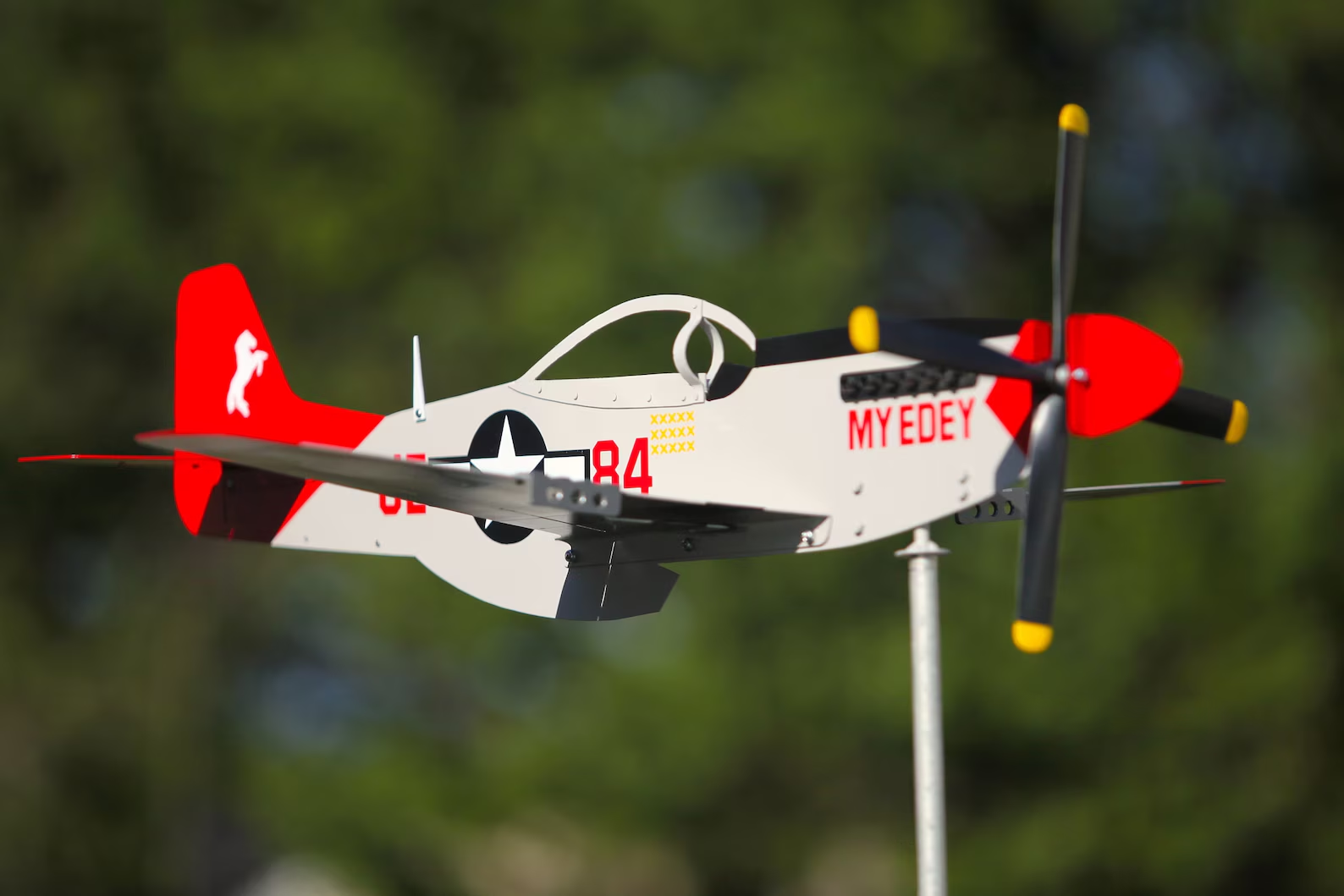
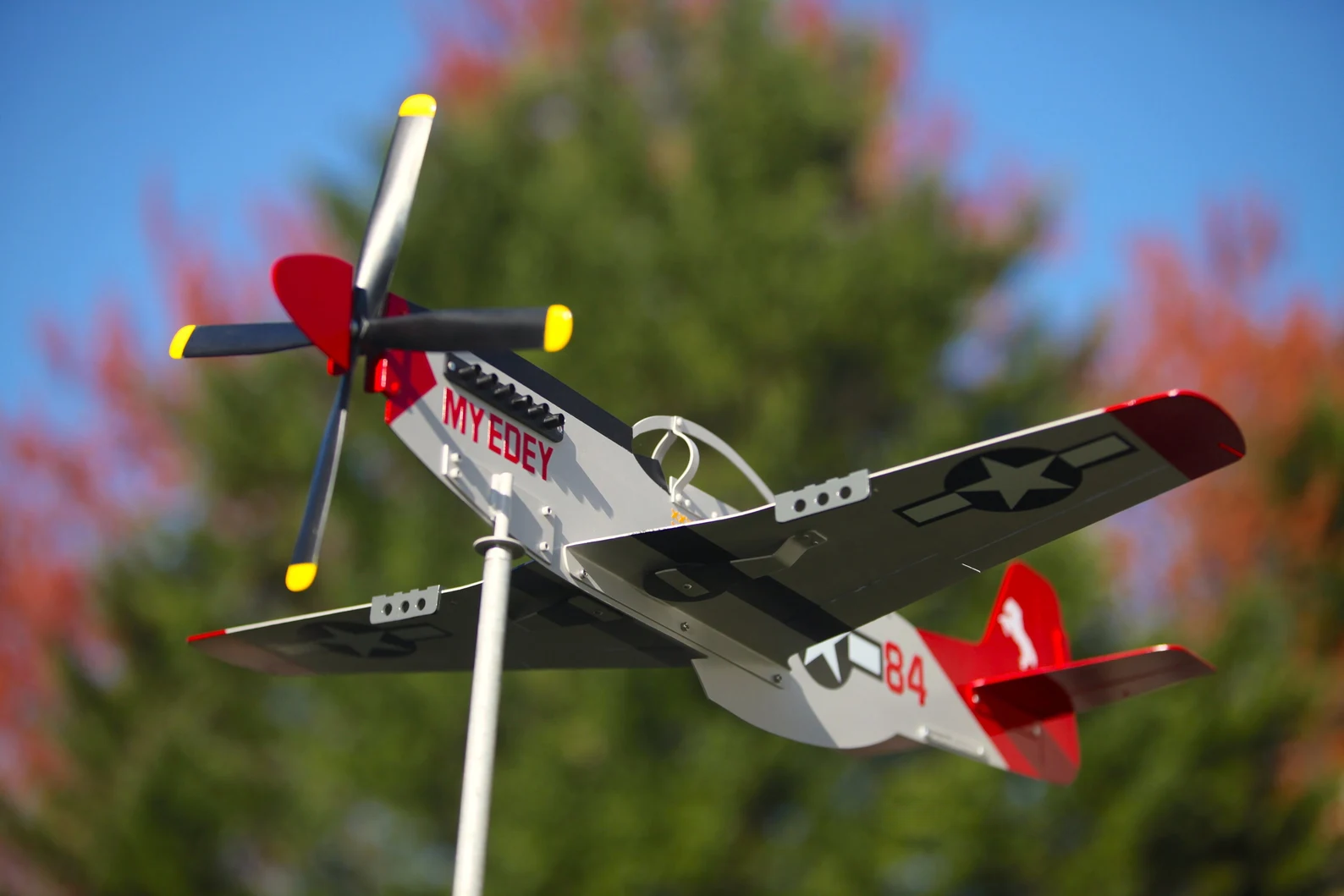
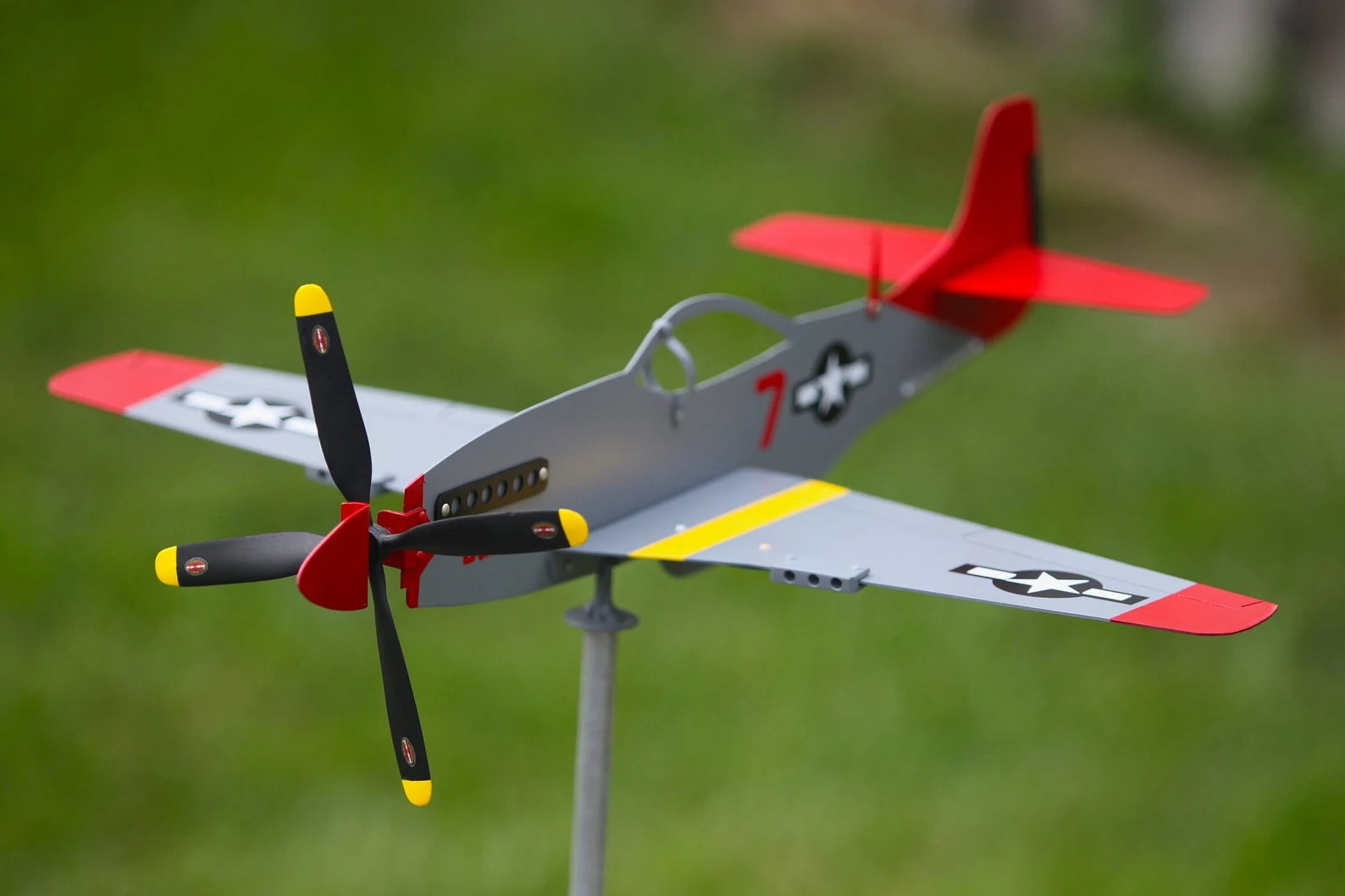
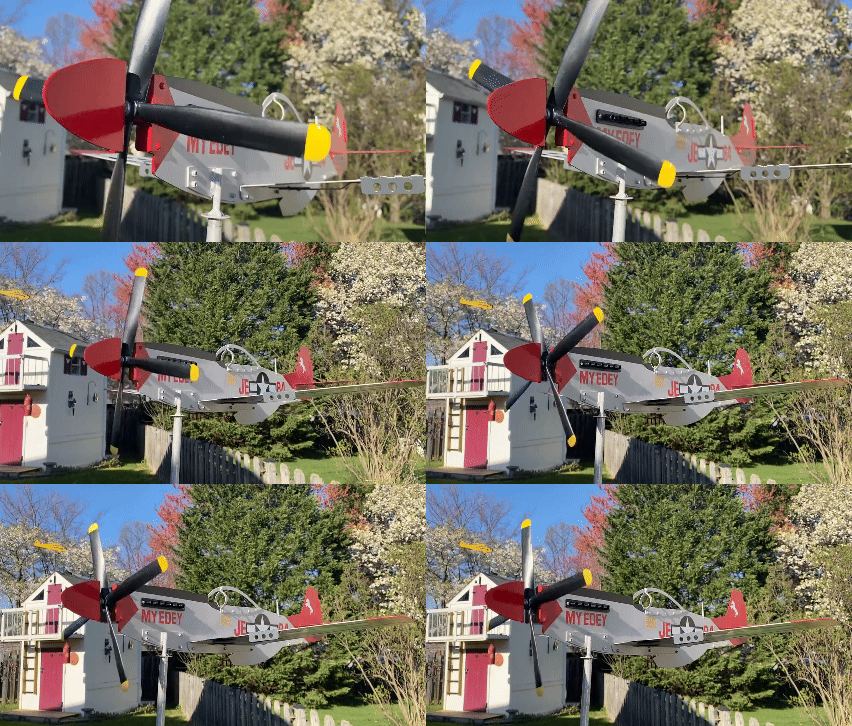
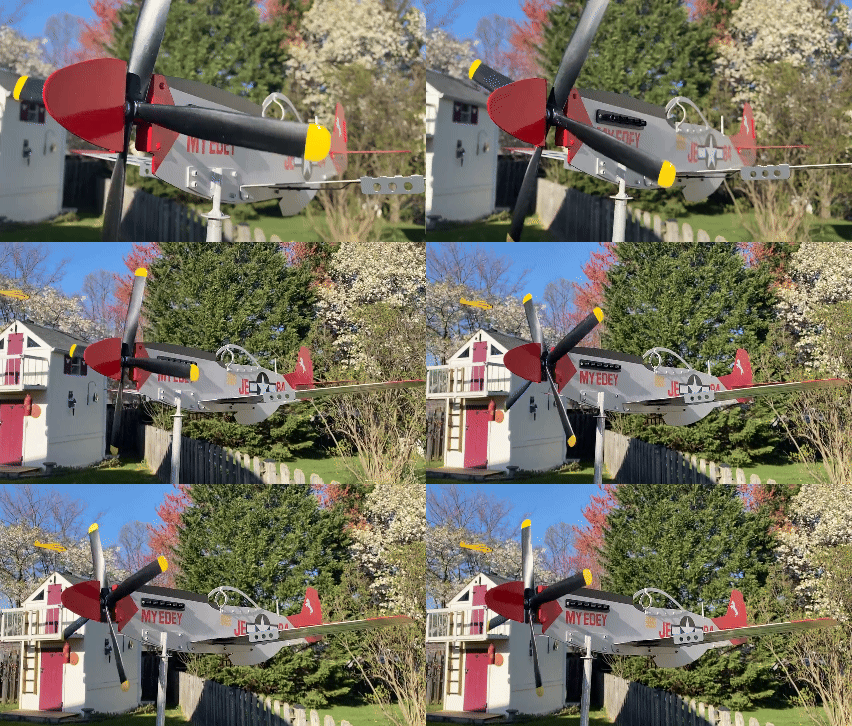
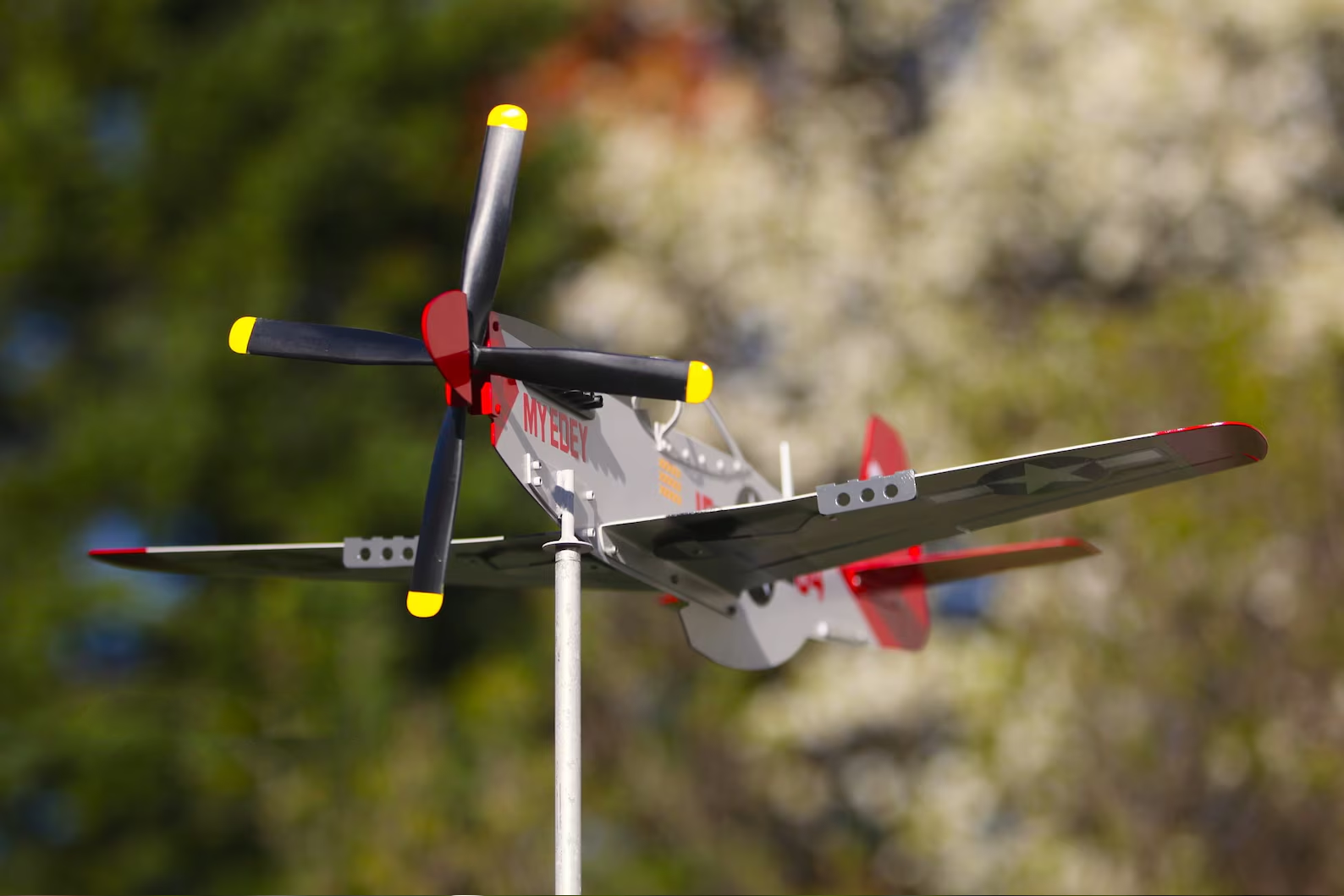
✈️ North American Aviation P-51 Mustang (Variant A)
The P-51 Mustang was a long-range, single-seat fighter developed by North American Aviation during World War II. Originally designed to meet a British requirement, it quickly proved to be one of the most effective fighters of the war once equipped with the Rolls-Royce Merlin engine.
With its exceptional speed, range, and high-altitude performance, the Mustang became the backbone of Allied air superiority over Europe. It escorted heavy bombers deep into enemy territory, challenged enemy fighters head-on, and helped turn the air war decisively in favor of the Allies. Feared by opponents and trusted by pilots, the P-51 earned a reputation for reliability, survivability, and lethal precision.
“I’ve stood beneath restored Mustangs and listened to veterans talk about long escorts over hostile skies. Seeing it move with the wind in my yard reminds me how air superiority was earned—mile by mile.”
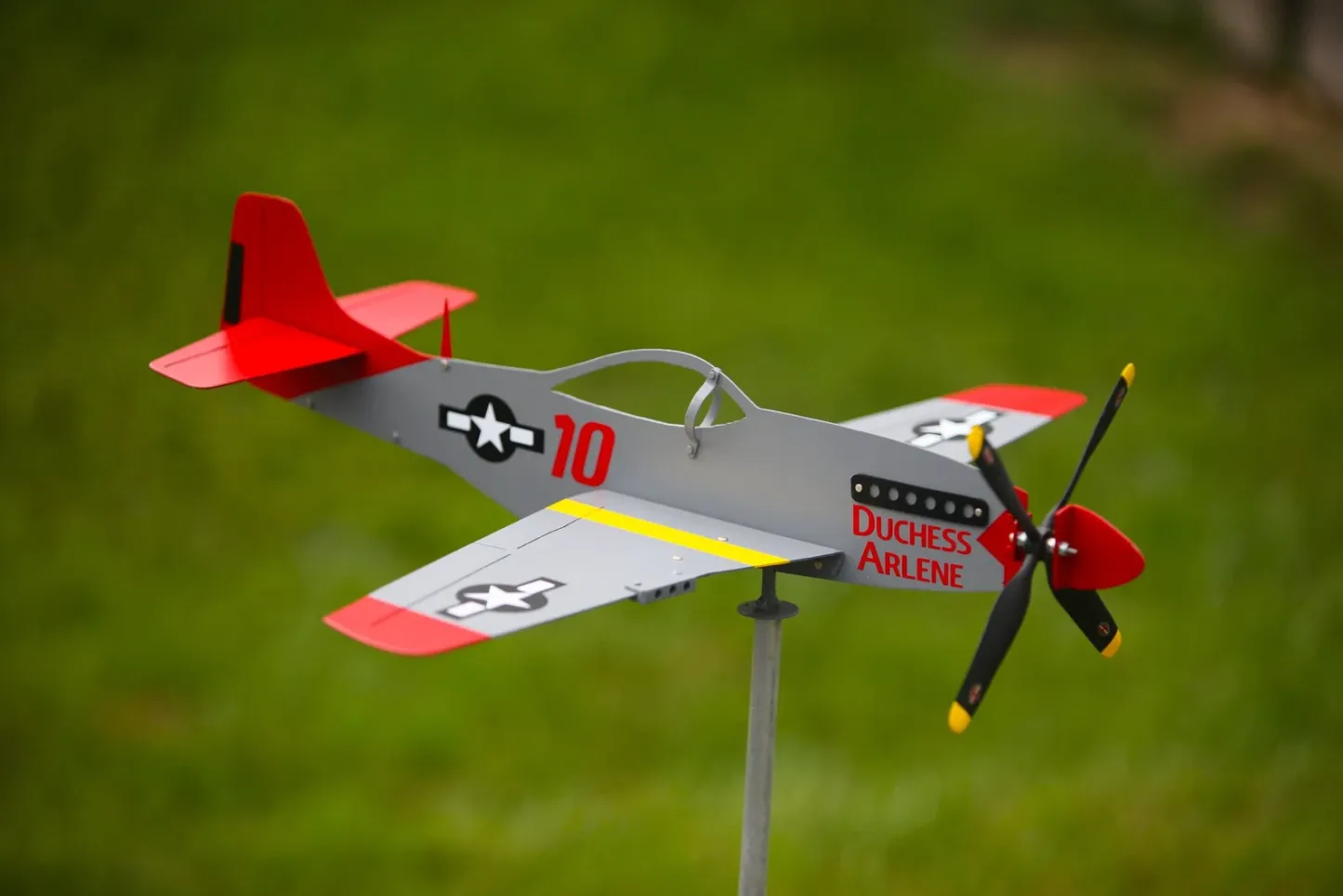
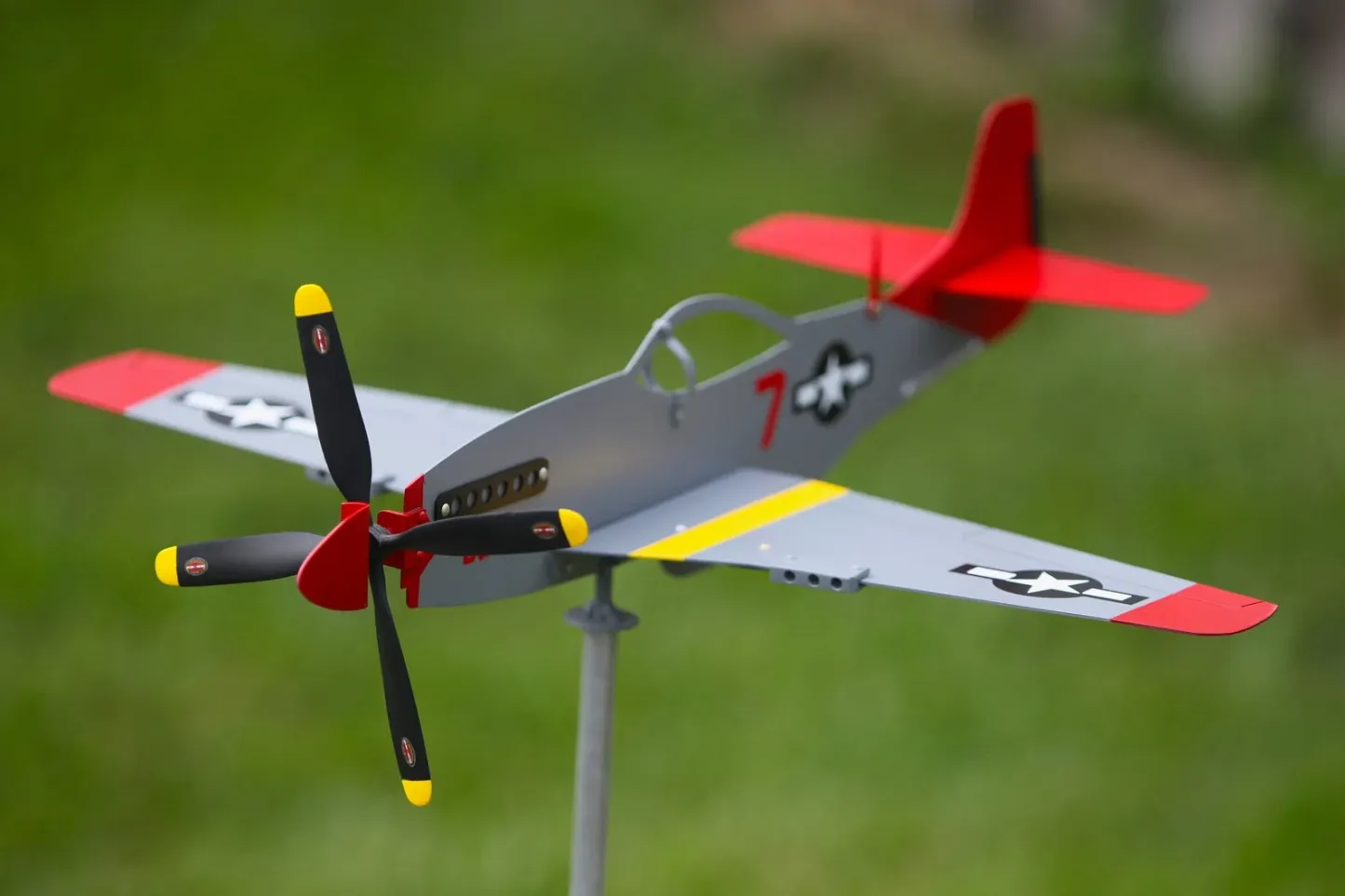
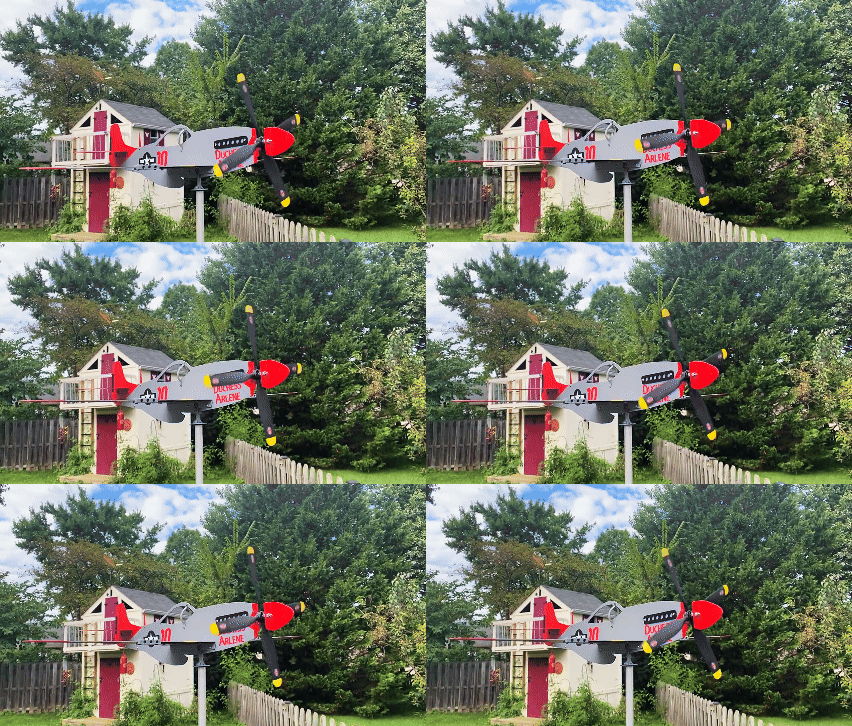
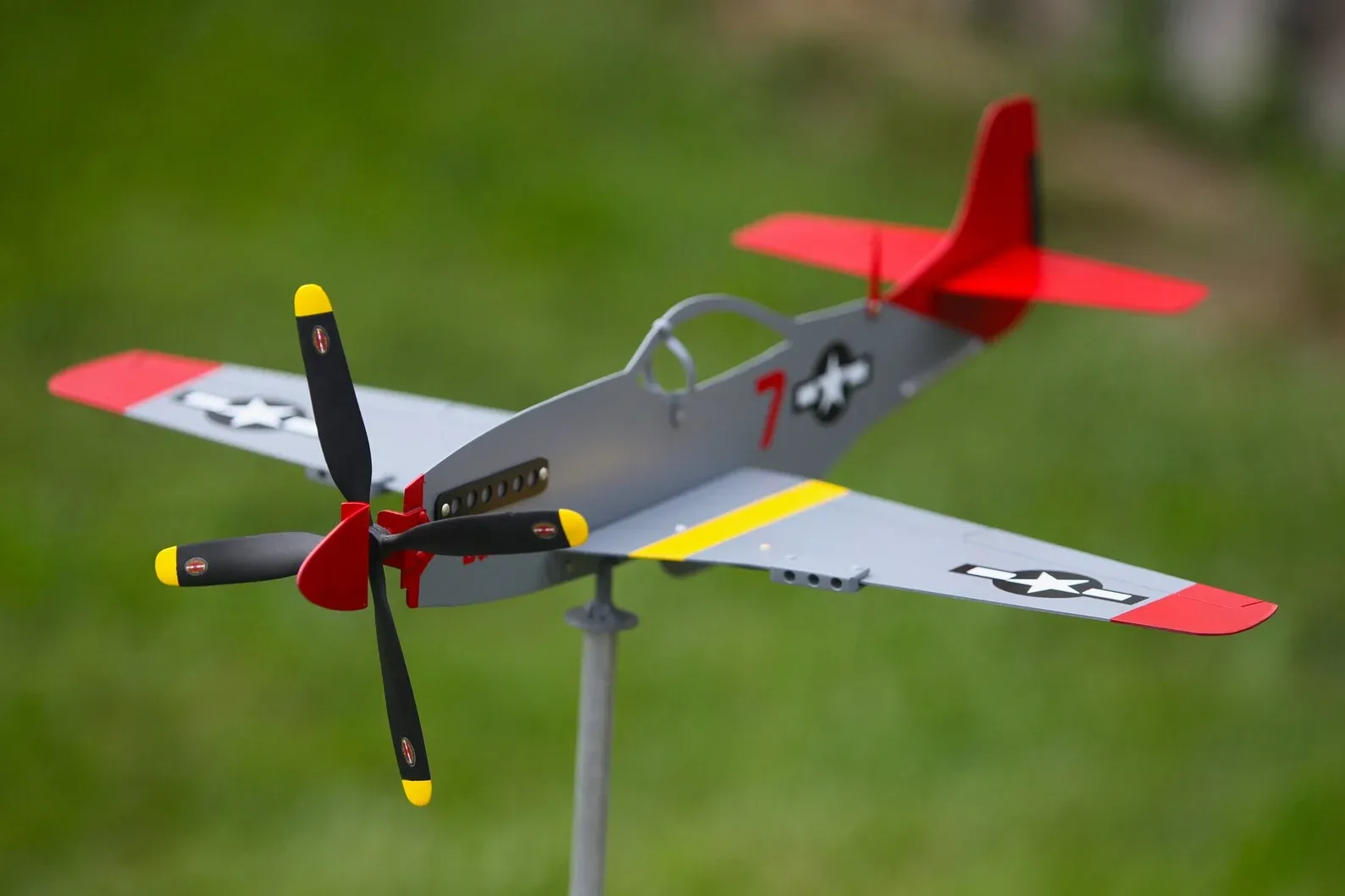
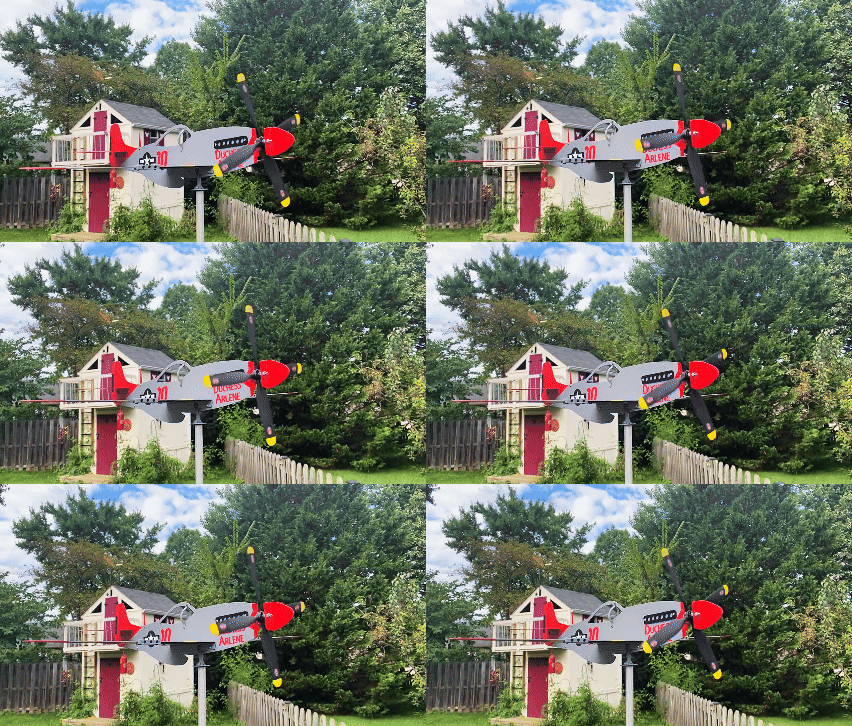
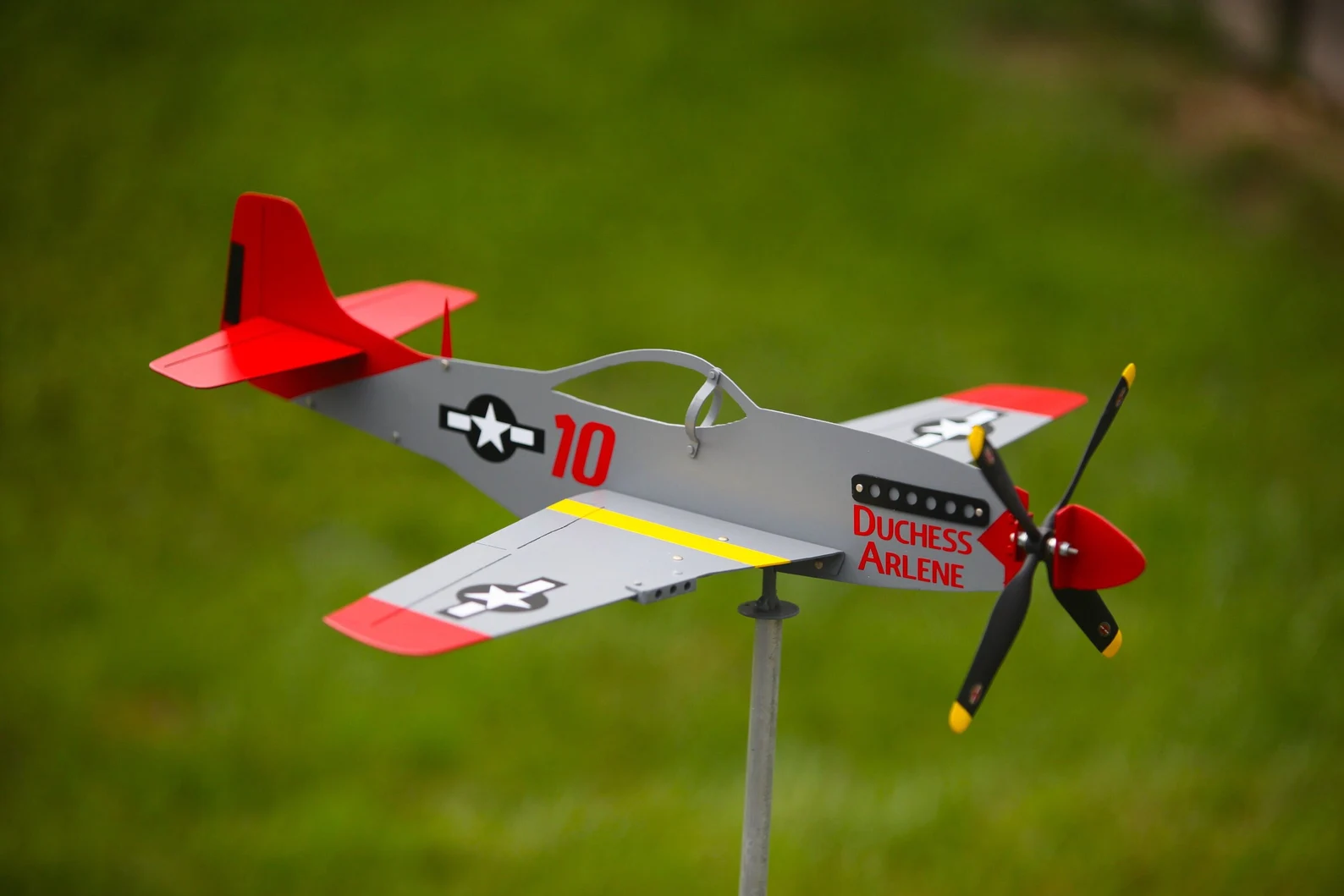
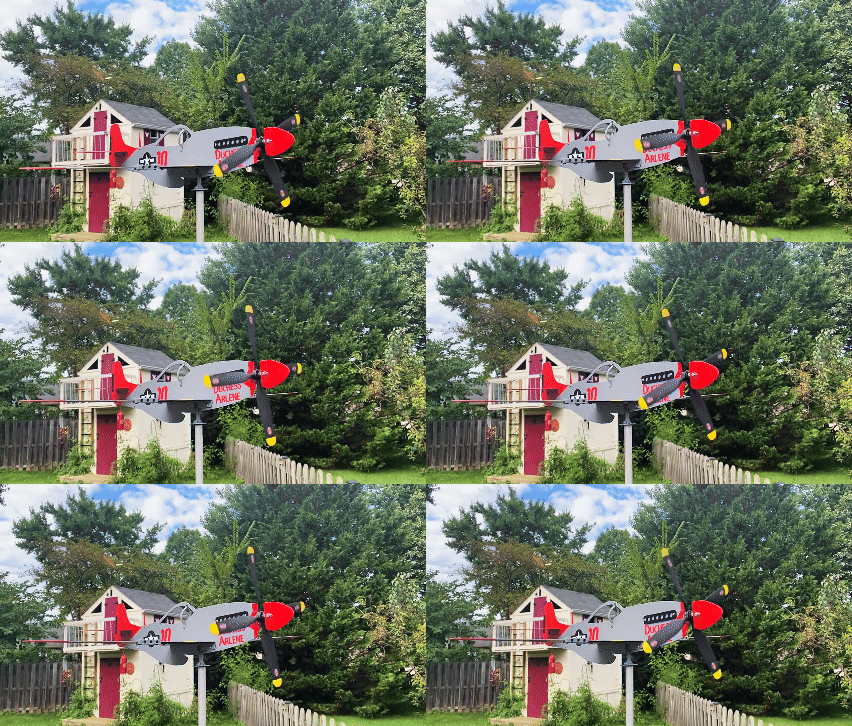
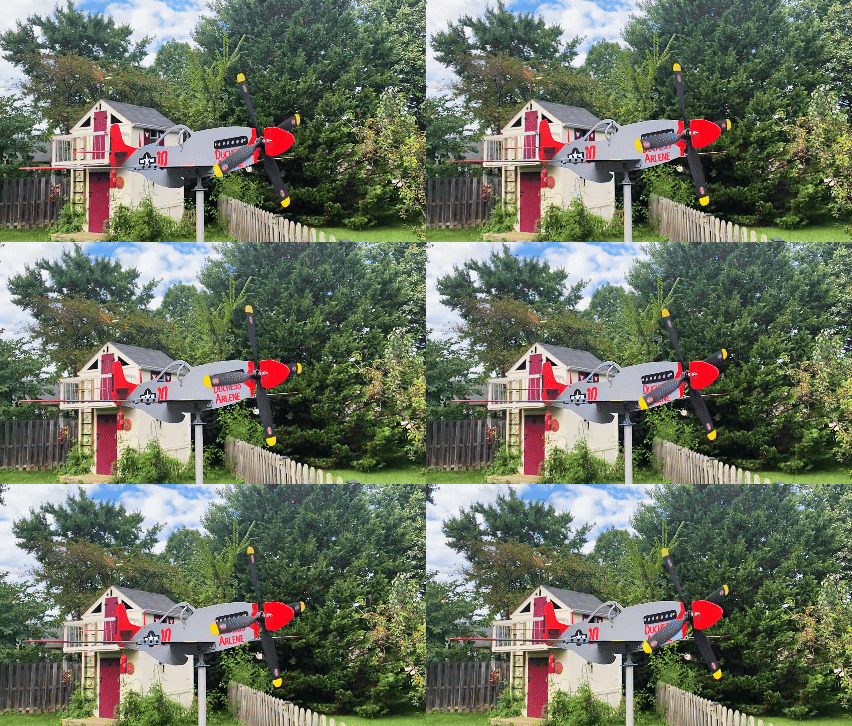
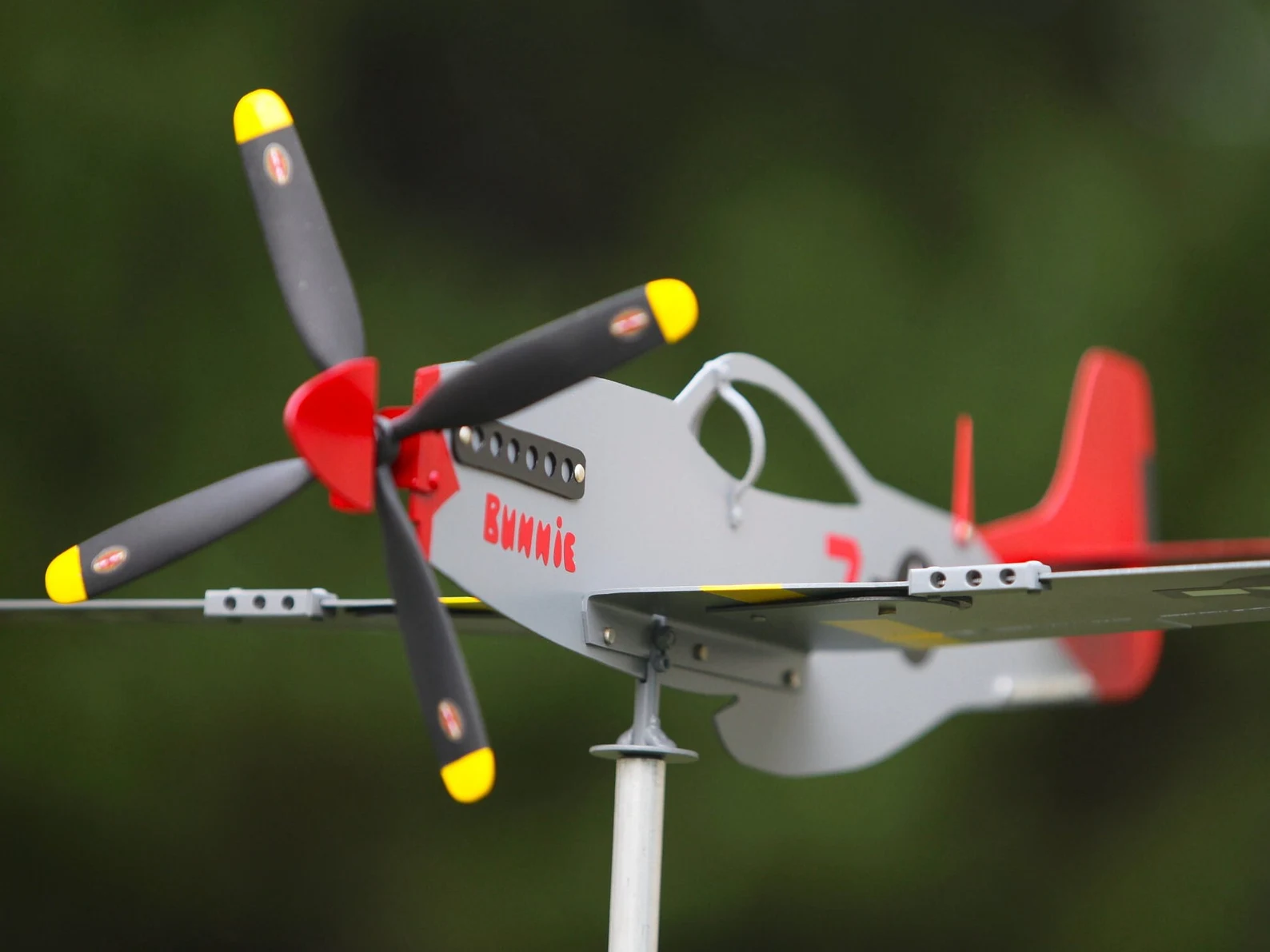
✈️ North American Aviation P-51 Mustang (Variant B)
The P-51 Mustang is one of the most legendary fighter aircraft of World War II, developed by North American Aviation and entering service in the early 1940s. Designed for speed, range, and high-altitude performance, the Mustang became the long-range escort that Allied bombers desperately needed over Europe. With its sleek airframe and powerful engine, it could fly deep into enemy territory, protect bomber formations, and still engage enemy fighters on equal or superior terms.
This variant of the P-51 reflects the Mustang at the height of its combat legacy—clean lines, aggressive stance, and unmistakable markings that symbolize air superiority. The aircraft earned a reputation not just for its performance, but for reliability, survivability, and the confidence it gave to the pilots who flew it. By the end of the war, the P-51 was widely credited with helping secure Allied control of the skies.
“A fighter built for speed and distance. I’ve seen Mustangs suspended in museums, frozen mid-fight — now this one turns with the wind, standing watch over my yard.”This weather vane isn’t just a decorative piece; it’s a tribute to one of the aircraft that defined modern air combat and the pilots who trusted it when everything was on the line.
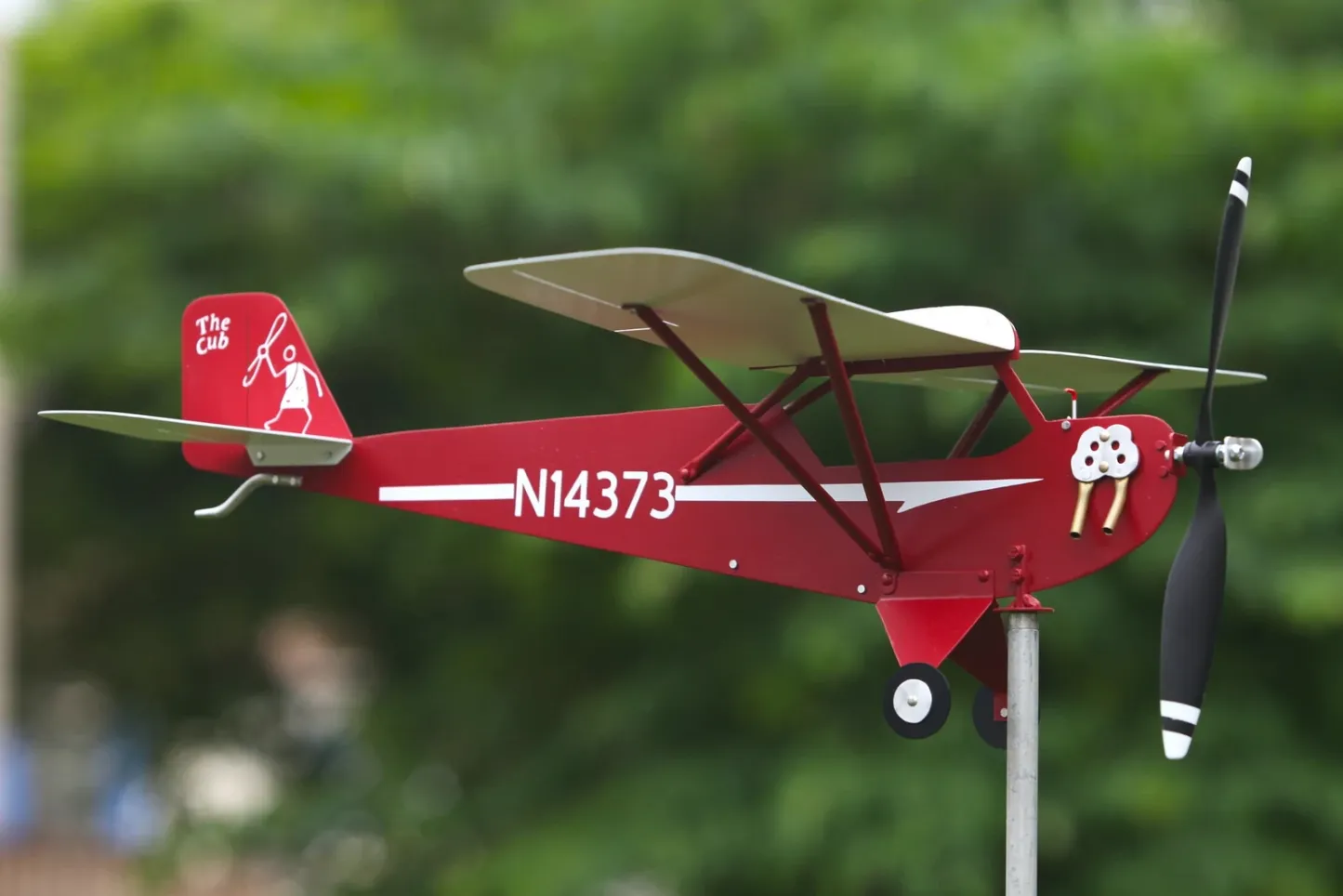
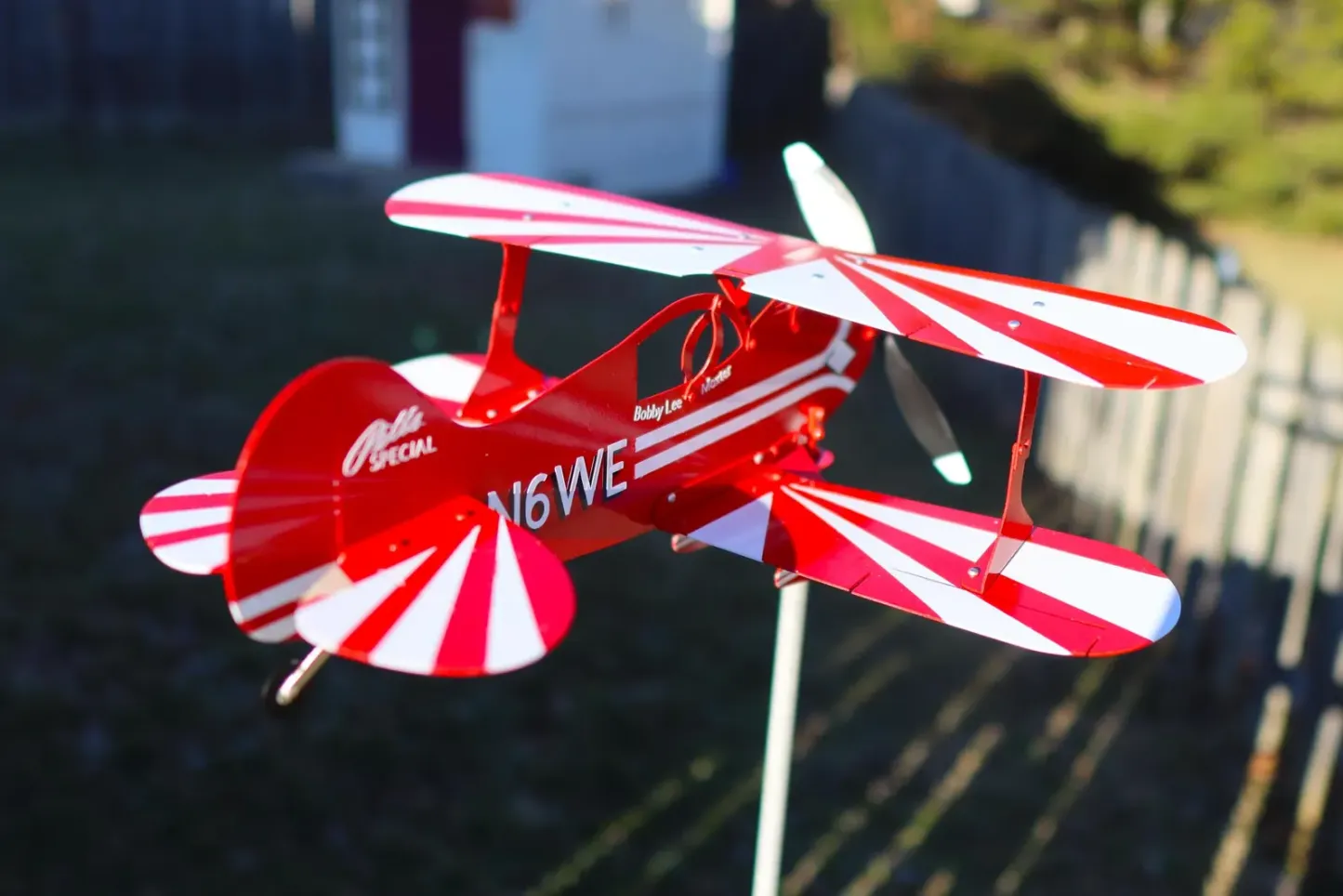
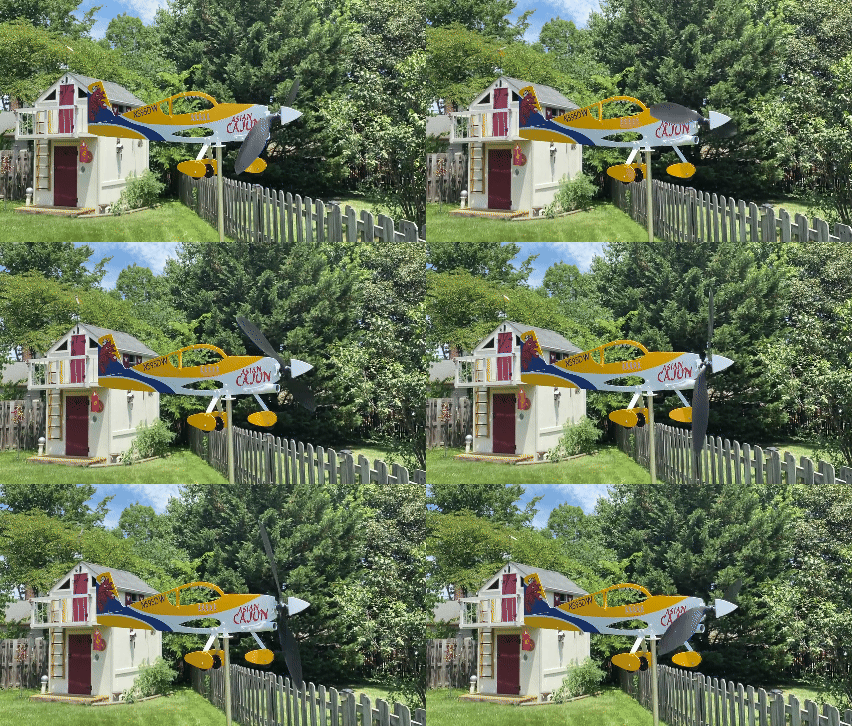
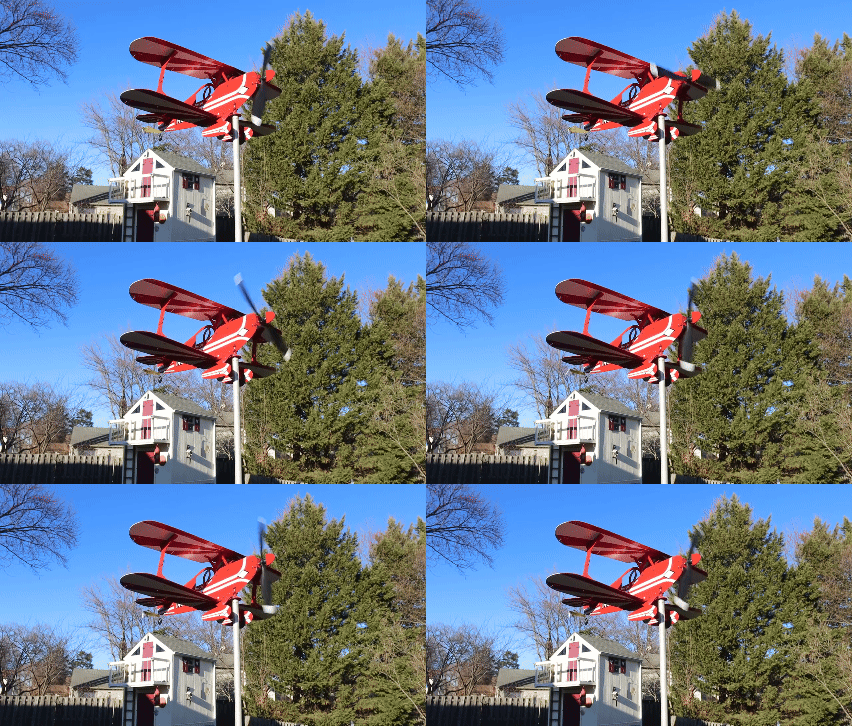
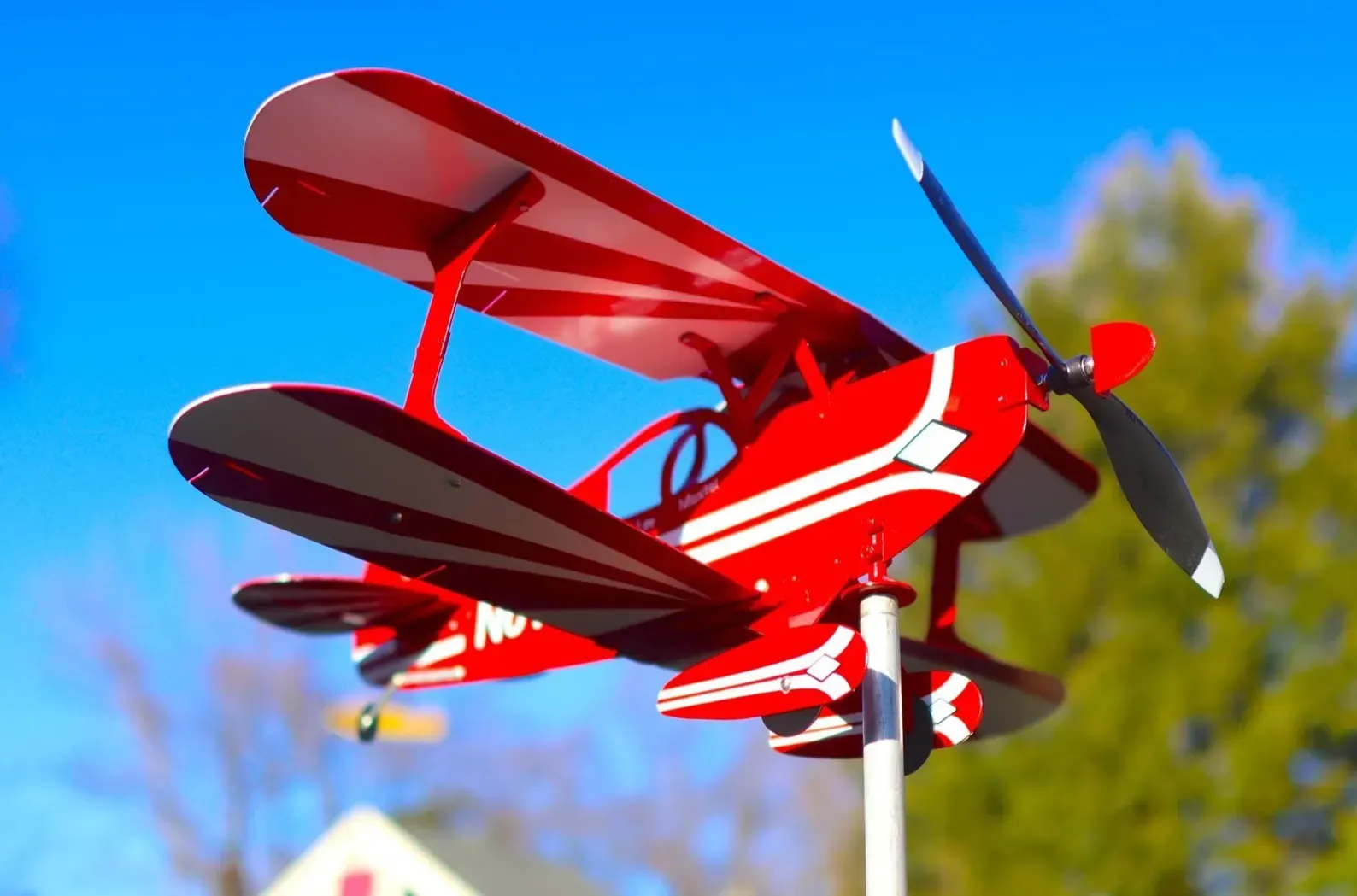
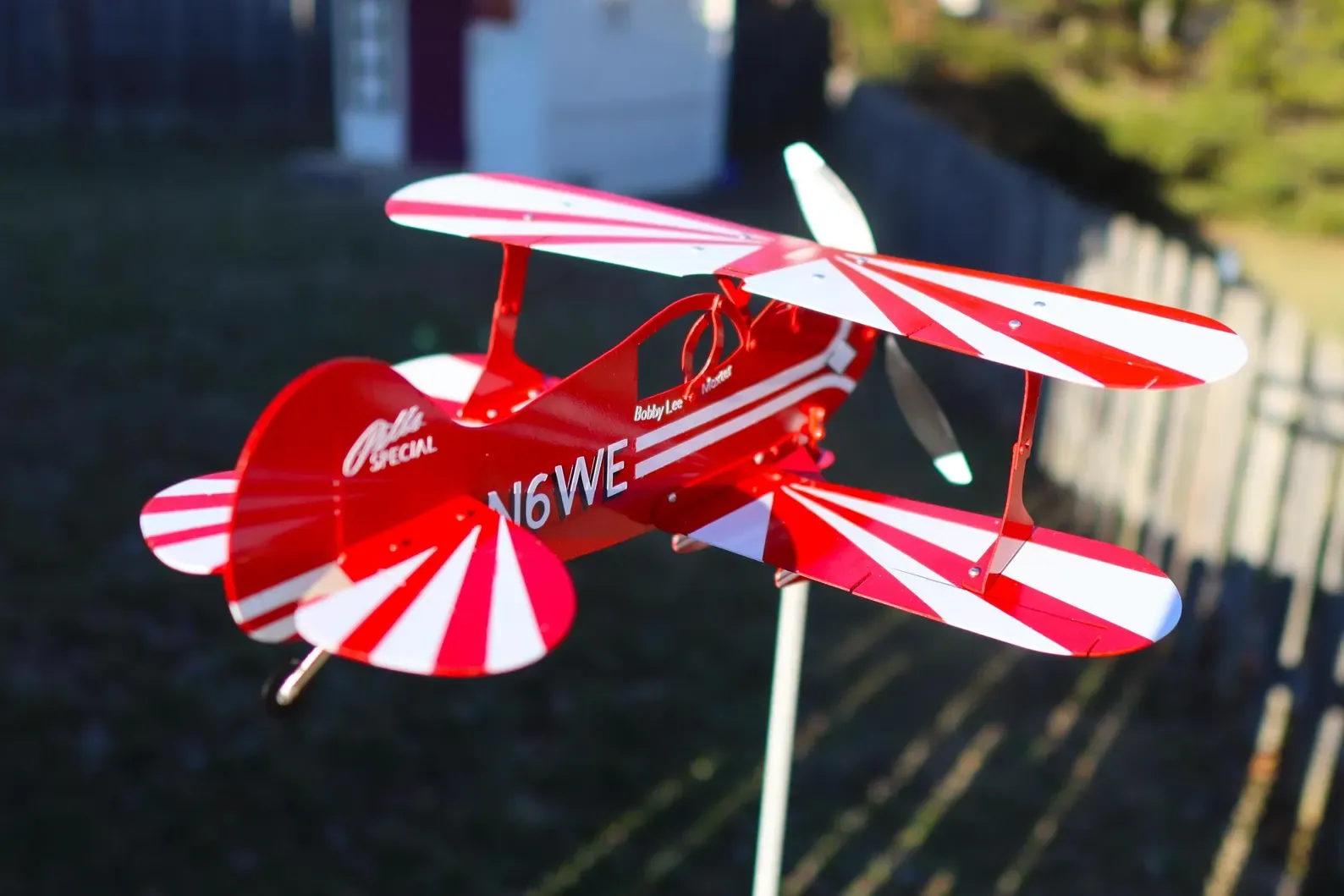
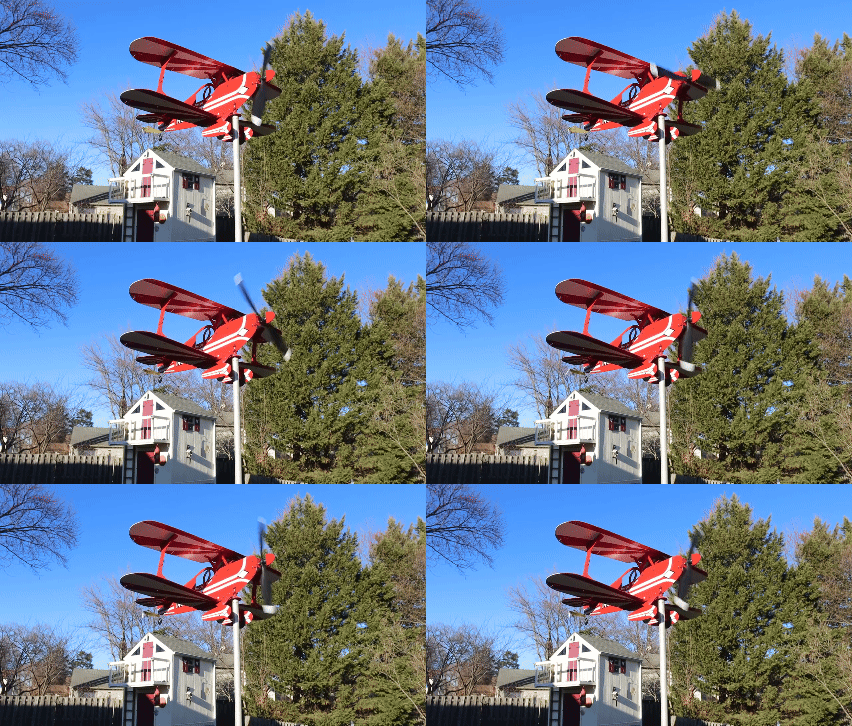
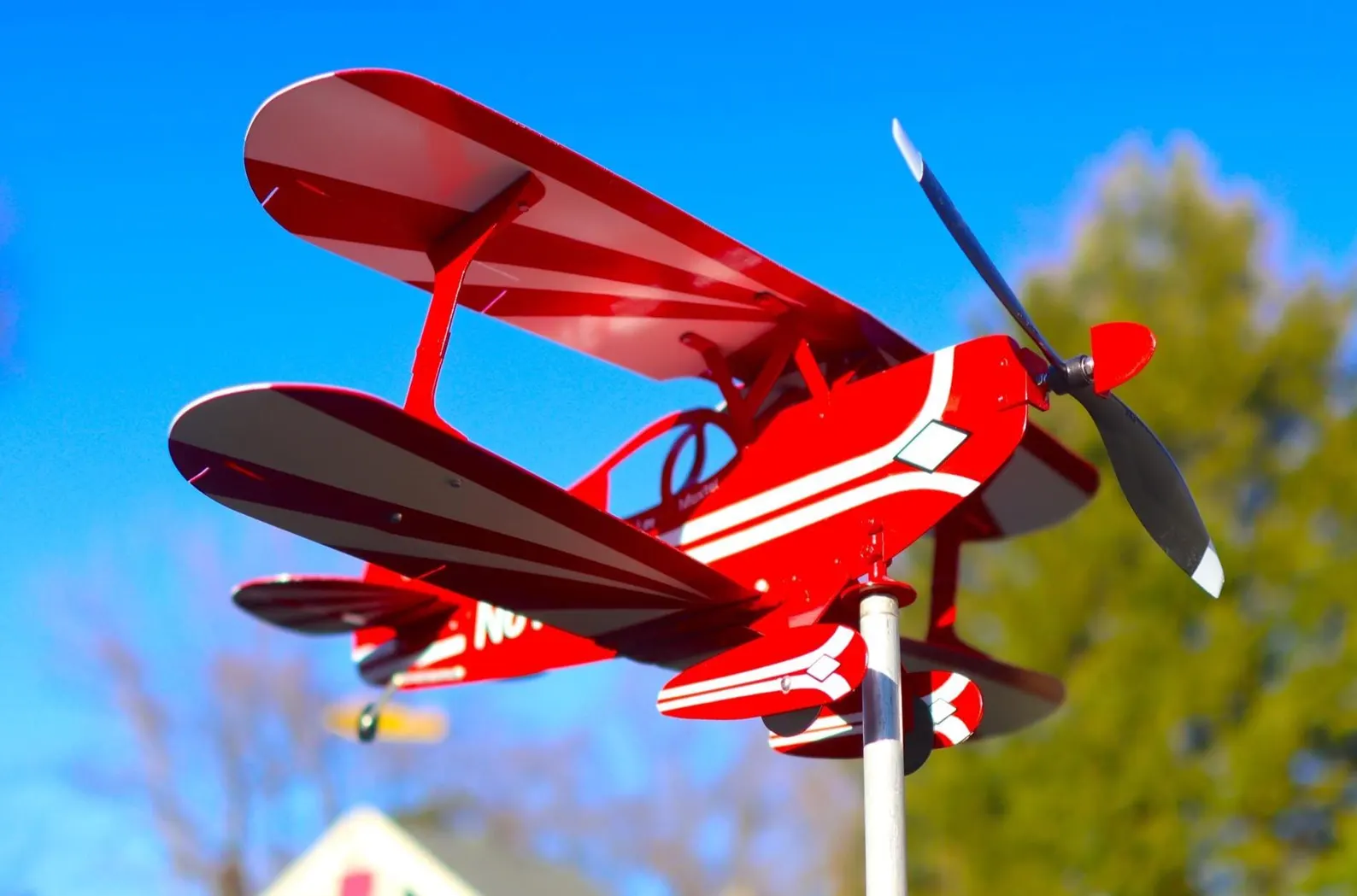
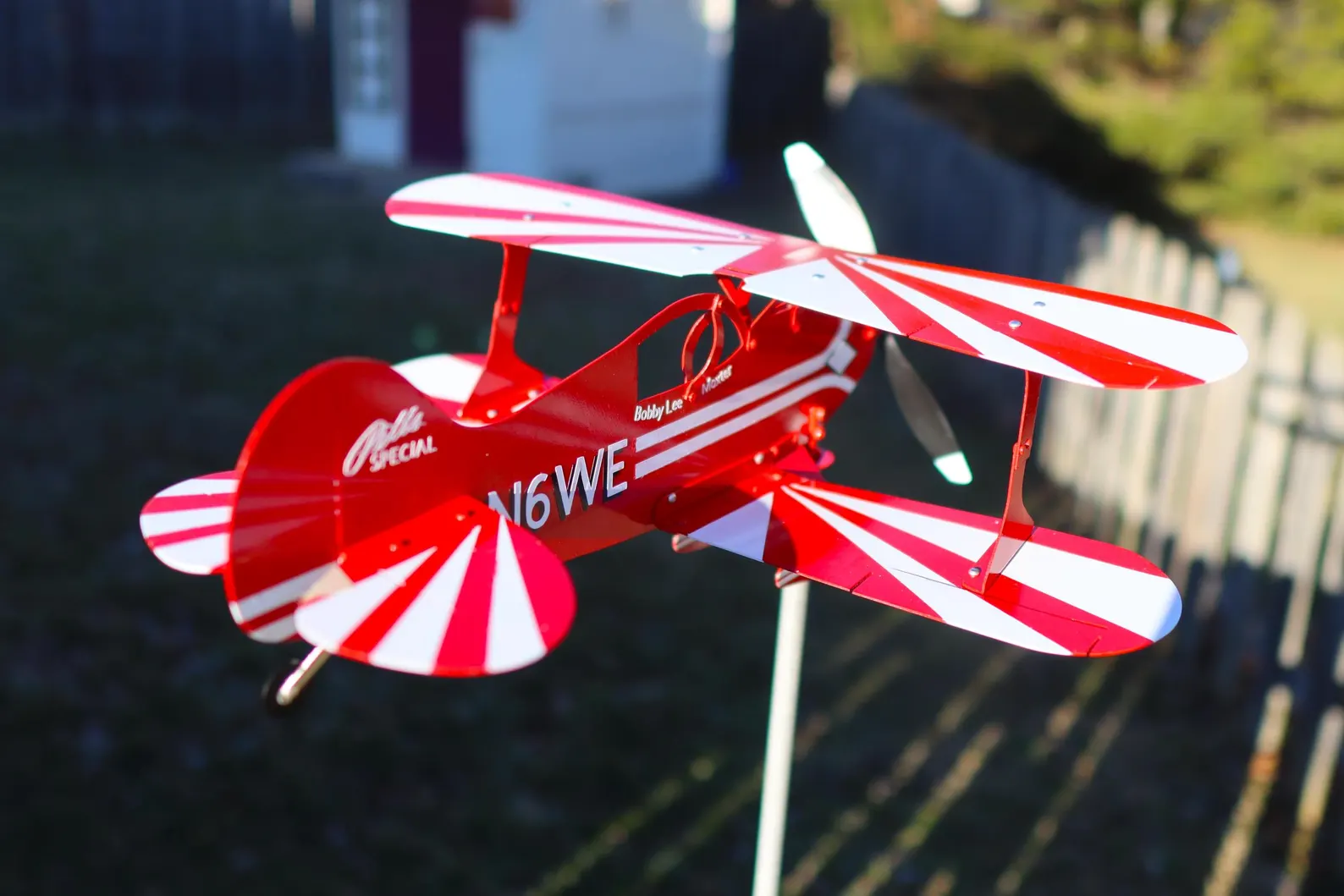
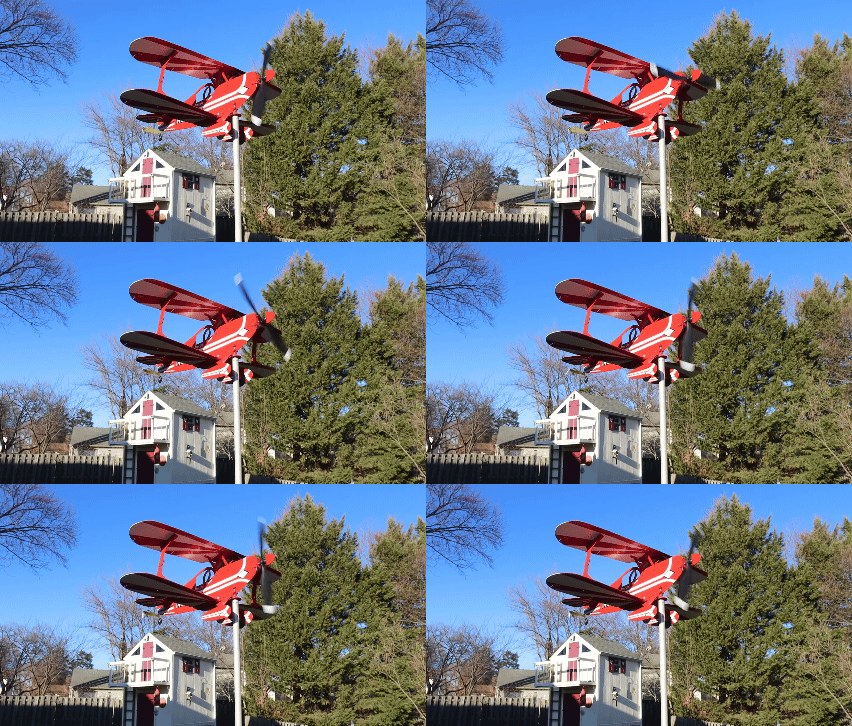
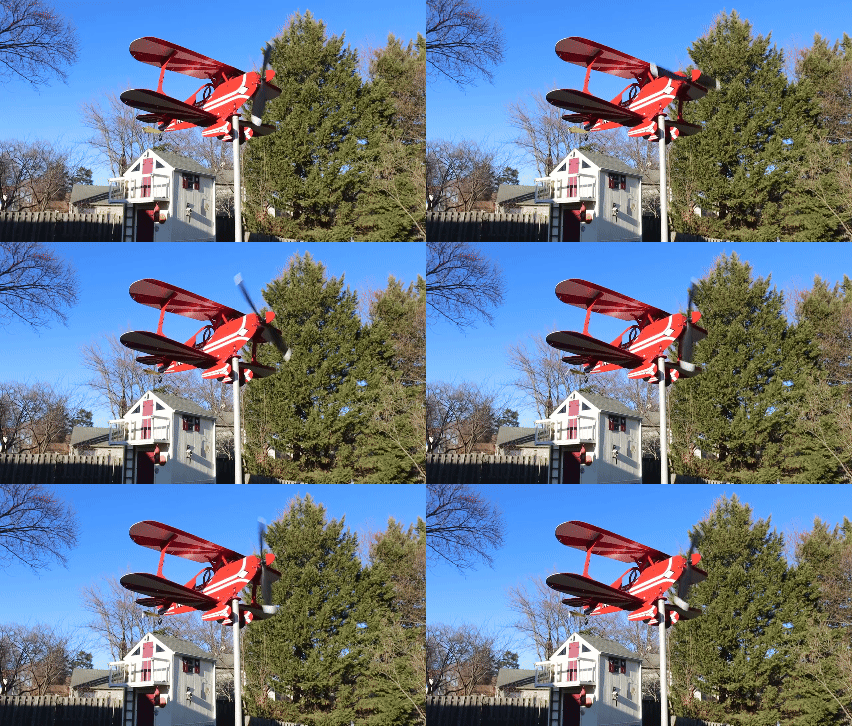
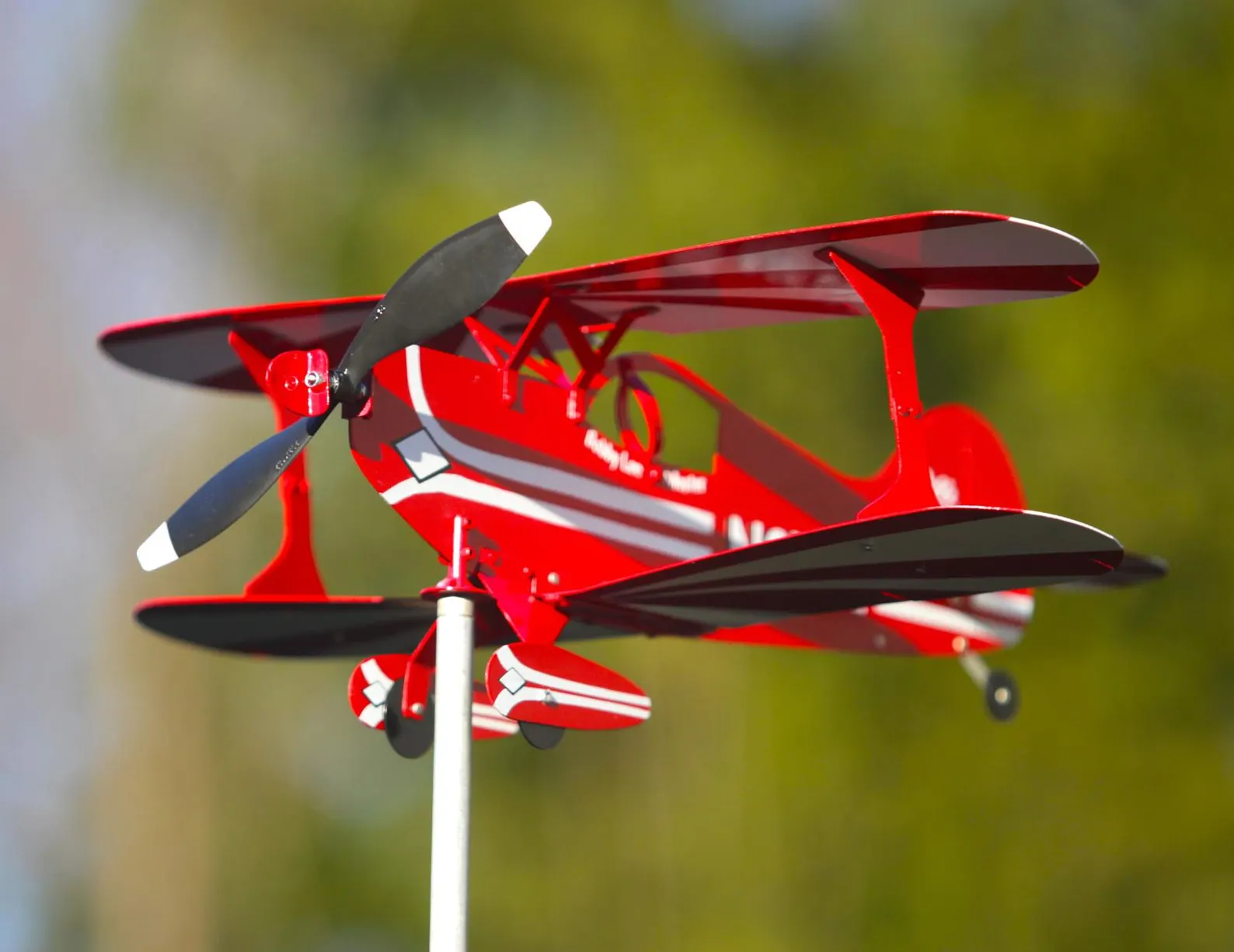
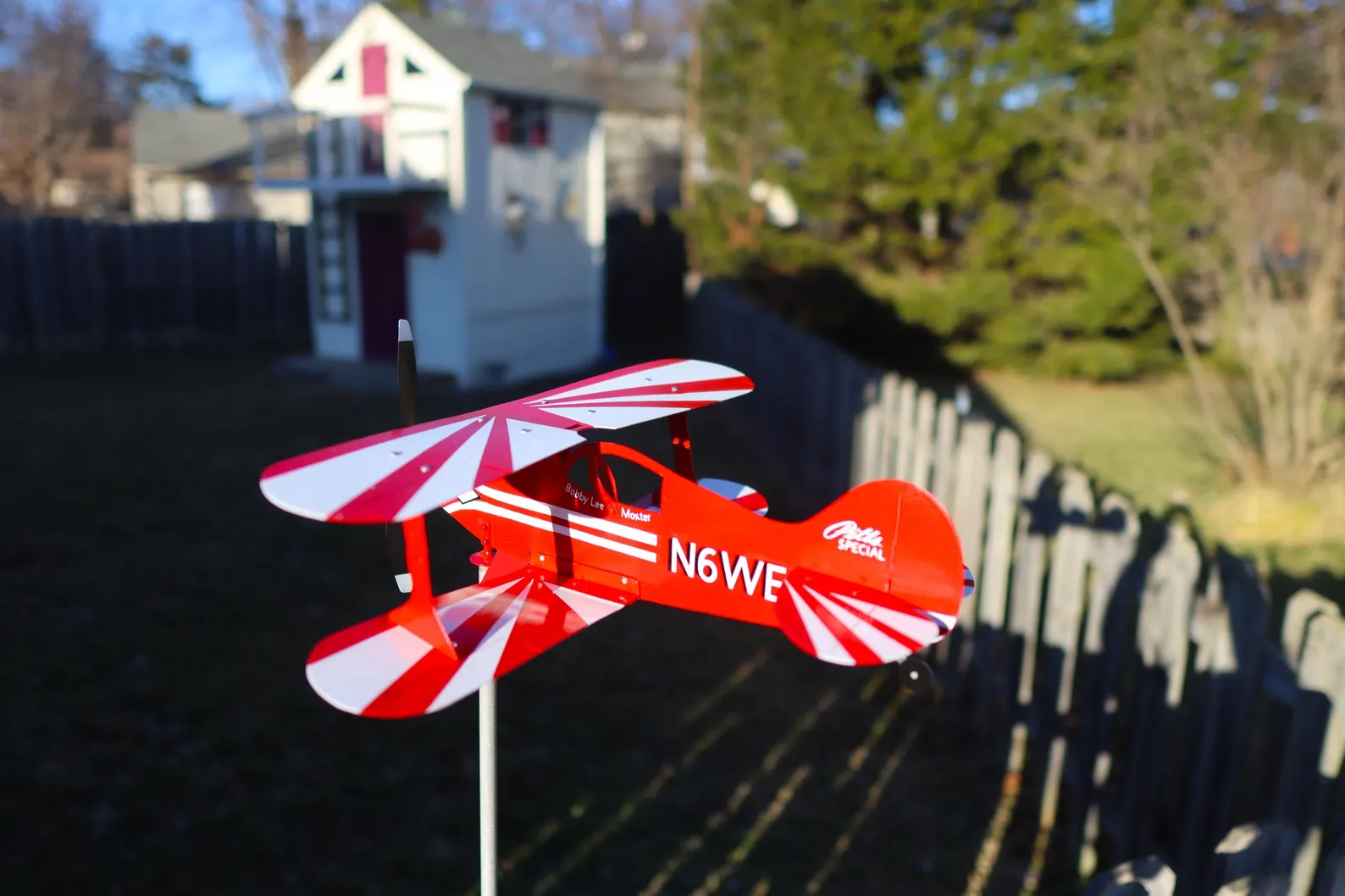
✈️ The Pitts Special S-1S.
The Pitts Special S-1S is a legendary single-seat aerobatic biplane, originally designed in the 1940s and refined into the S-1S variant in the 1970s. Built purely for precision, power, and extreme maneuverability, the Pitts became the gold standard of aerobatic competition aircraft, dominating airshows and championships for decades.
With its compact airframe, powerful engine, and unmistakable double-wing silhouette, the S-1S was never about comfort or range — it was about control. Pilots trusted it for snap rolls, vertical climbs, and knife-edge passes that demanded absolute confidence in both aircraft and hands at the controls.
Today, the Pitts Special stands as an icon of grassroots aviation — flown by passionate pilots who value skill over automation and tradition over trends.
“I’ve watched Pitts Specials carve the sky at airshows — tight, loud, unapologetic. Now that same spirit spins quietly in my yard, reminding me what real flying looks like.”
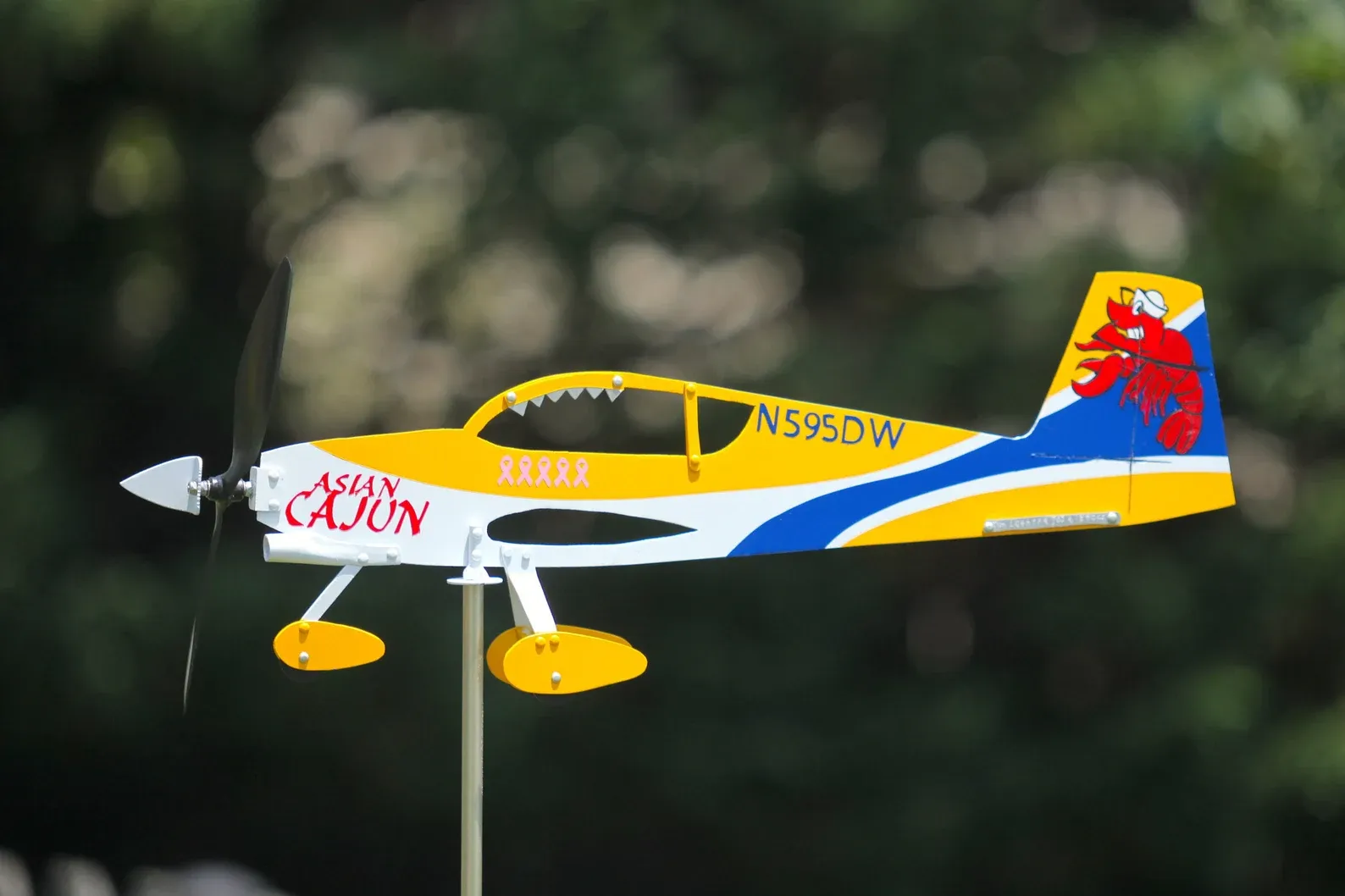
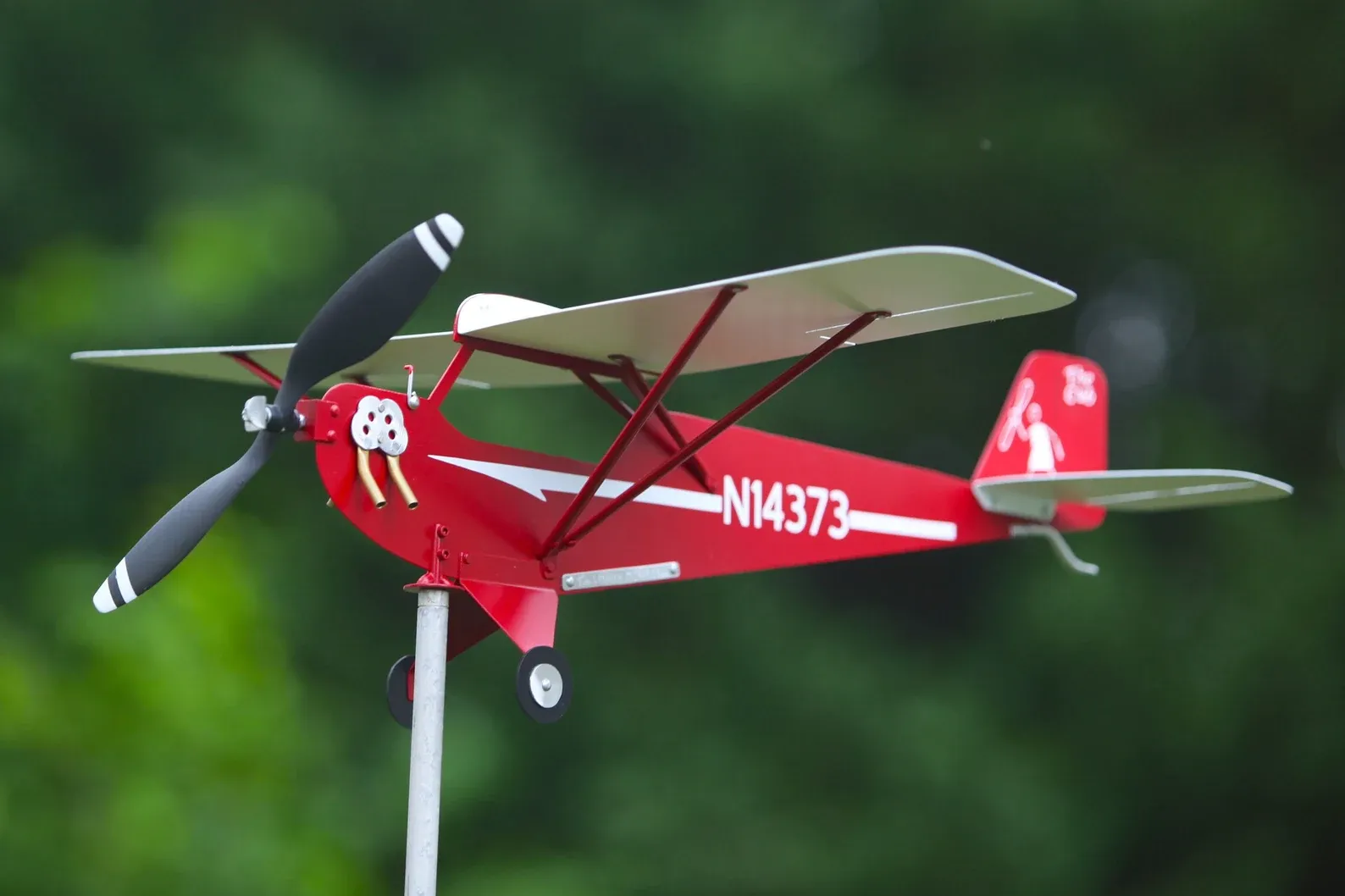
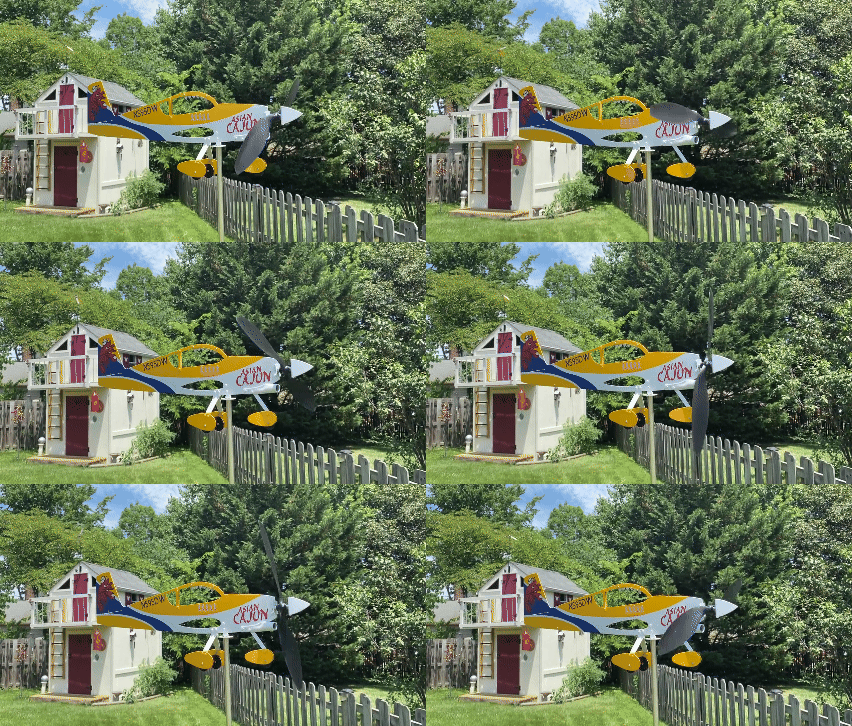
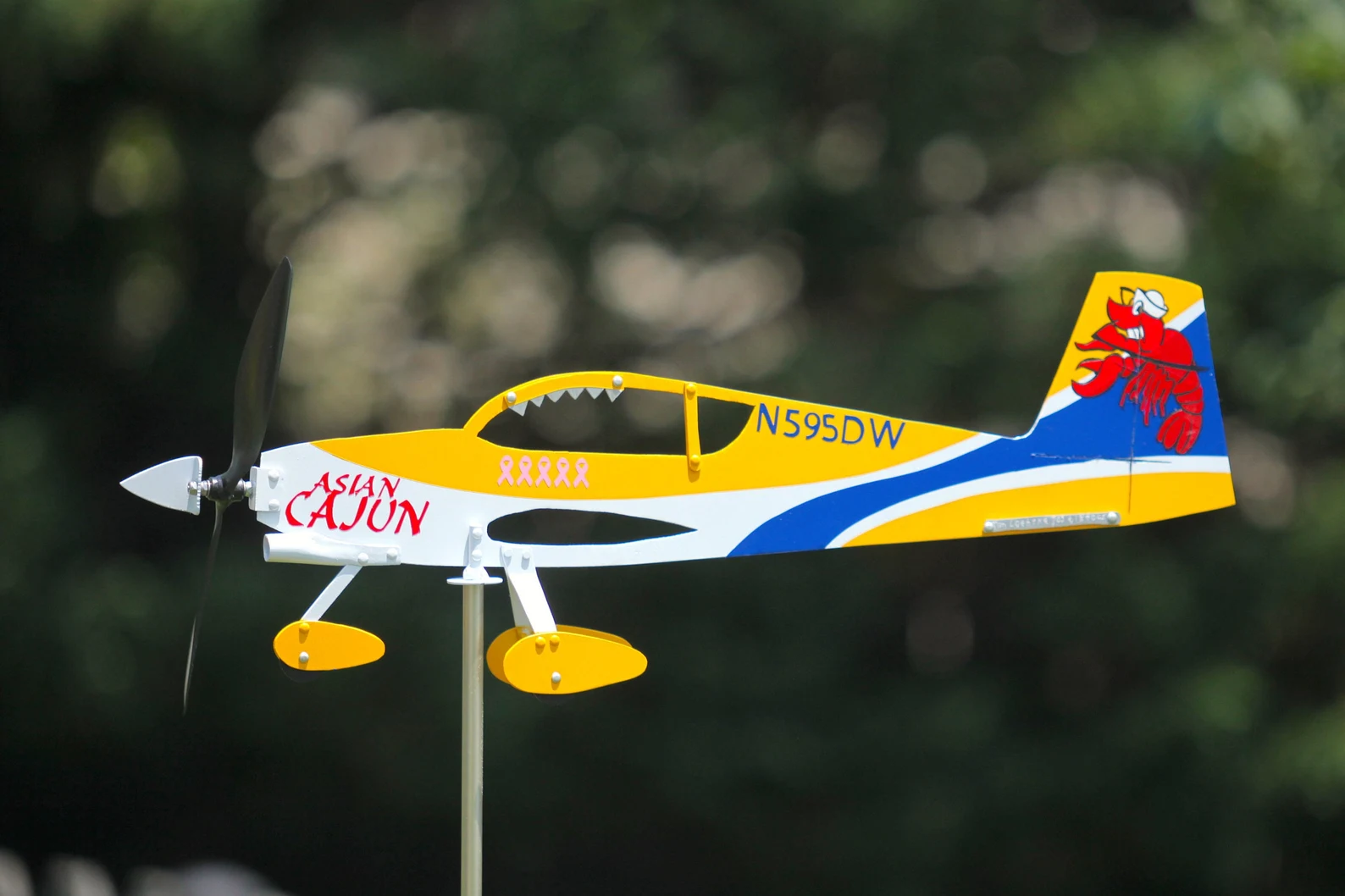
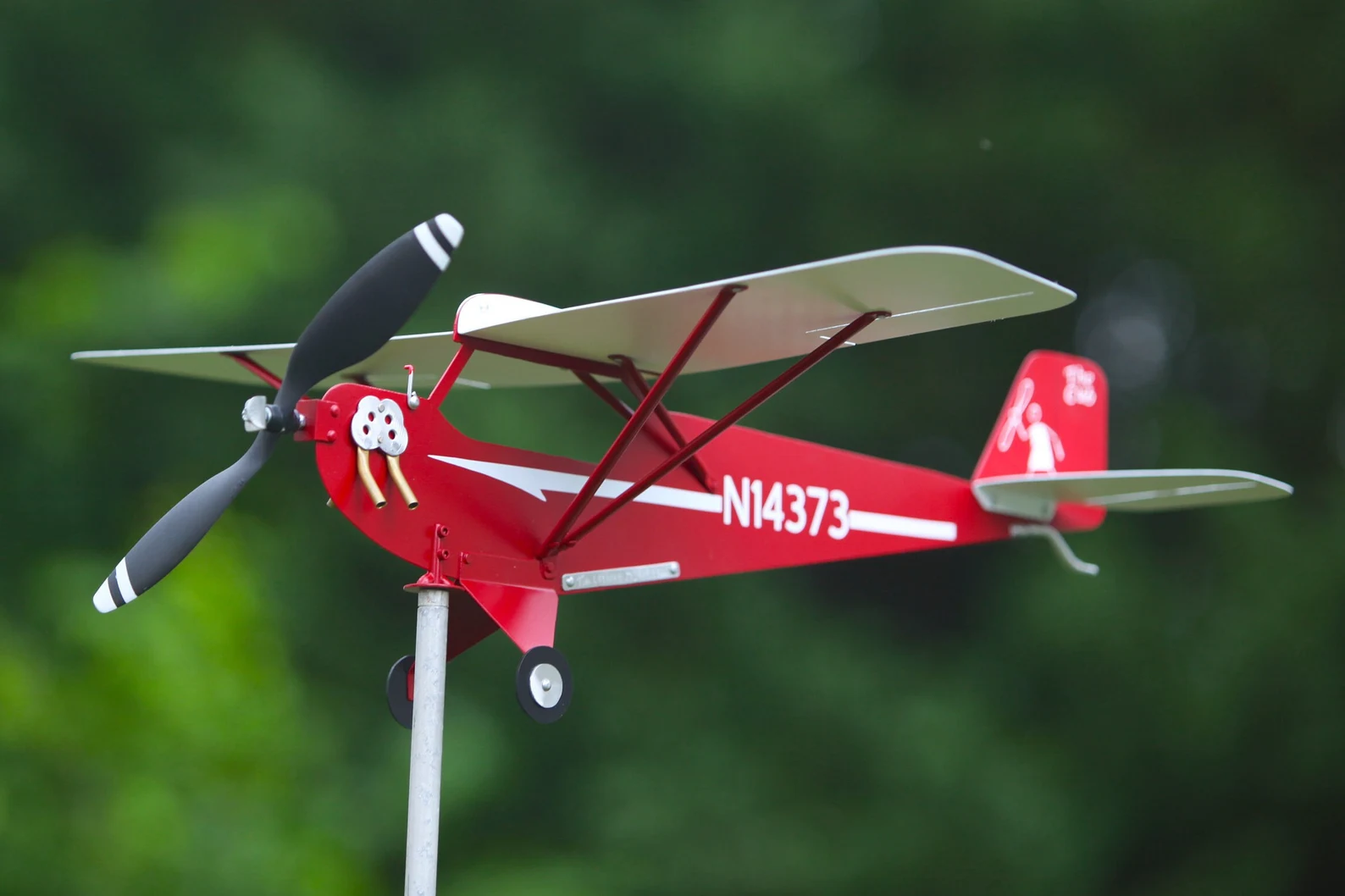
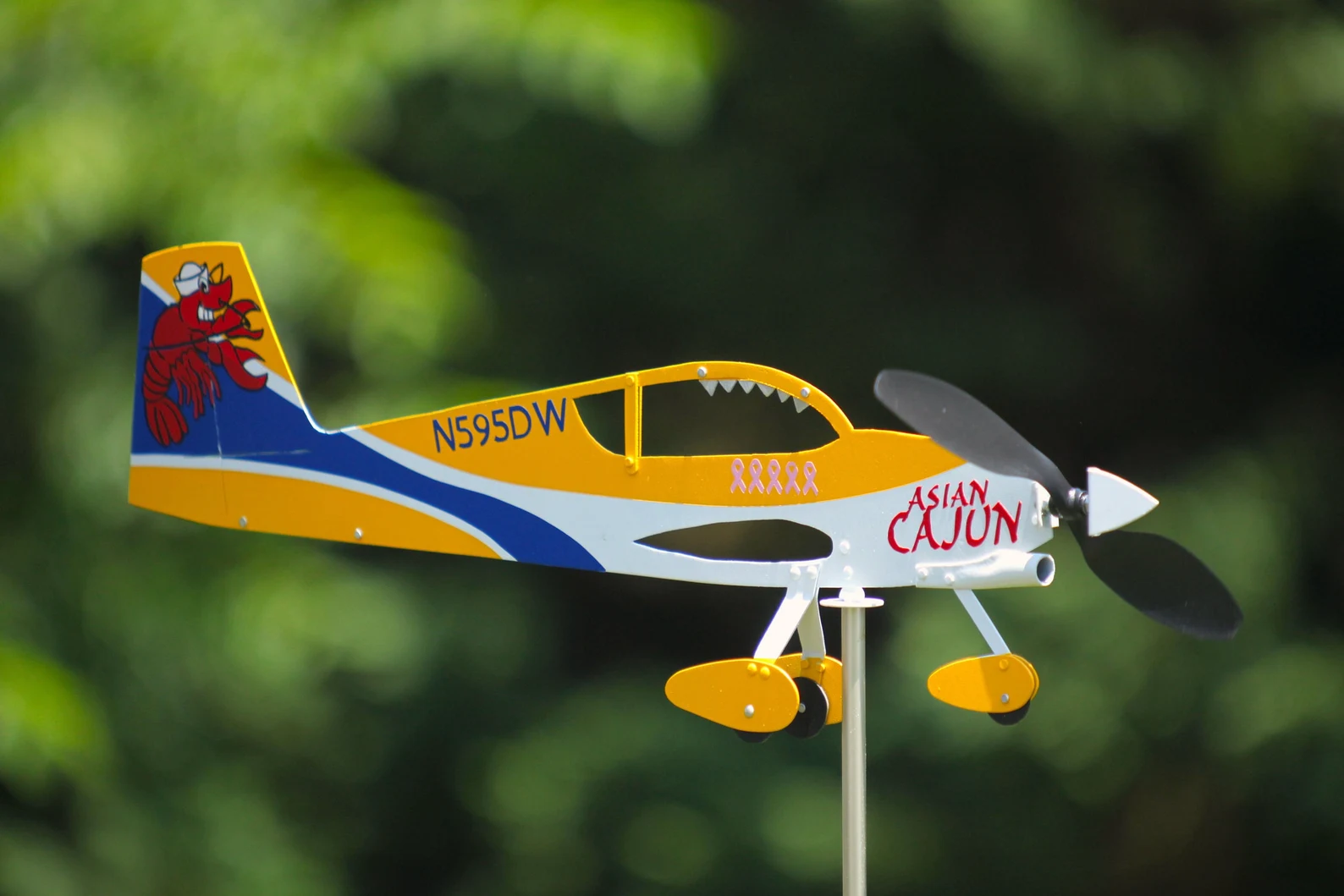
✈️ Vans RV-9A Airplane.
The Vans RV-9A is a modern, low-wing, two-seat sport aircraft designed for pilots who value efficiency, smooth handling, and long-distance comfort. Developed by Van’s Aircraft, the RV-9A is known for its excellent fuel economy, forgiving flight characteristics, and exceptional visibility — making it a favorite among homebuilt aviation enthusiasts and cross-country flyers alike.
Unlike high-performance warbirds or aerobatic racers, the RV-9A represents the quiet confidence of general aviation: weekend flights at sunrise, long legs across open countryside, and the simple joy of flying for the sake of flying. Its tricycle landing gear and stable design make it approachable, while its clean lines and balanced proportions give it a timeless, purposeful look in the air.
This aircraft weather vane captures that spirit — not as a symbol of combat or speed, but as a tribute to personal aviation, craftsmanship, and the freedom of open skies.
“Not every aircraft was built for war. Some were built for freedom — and this one reminds me why I fell in love with flying in the first place.”
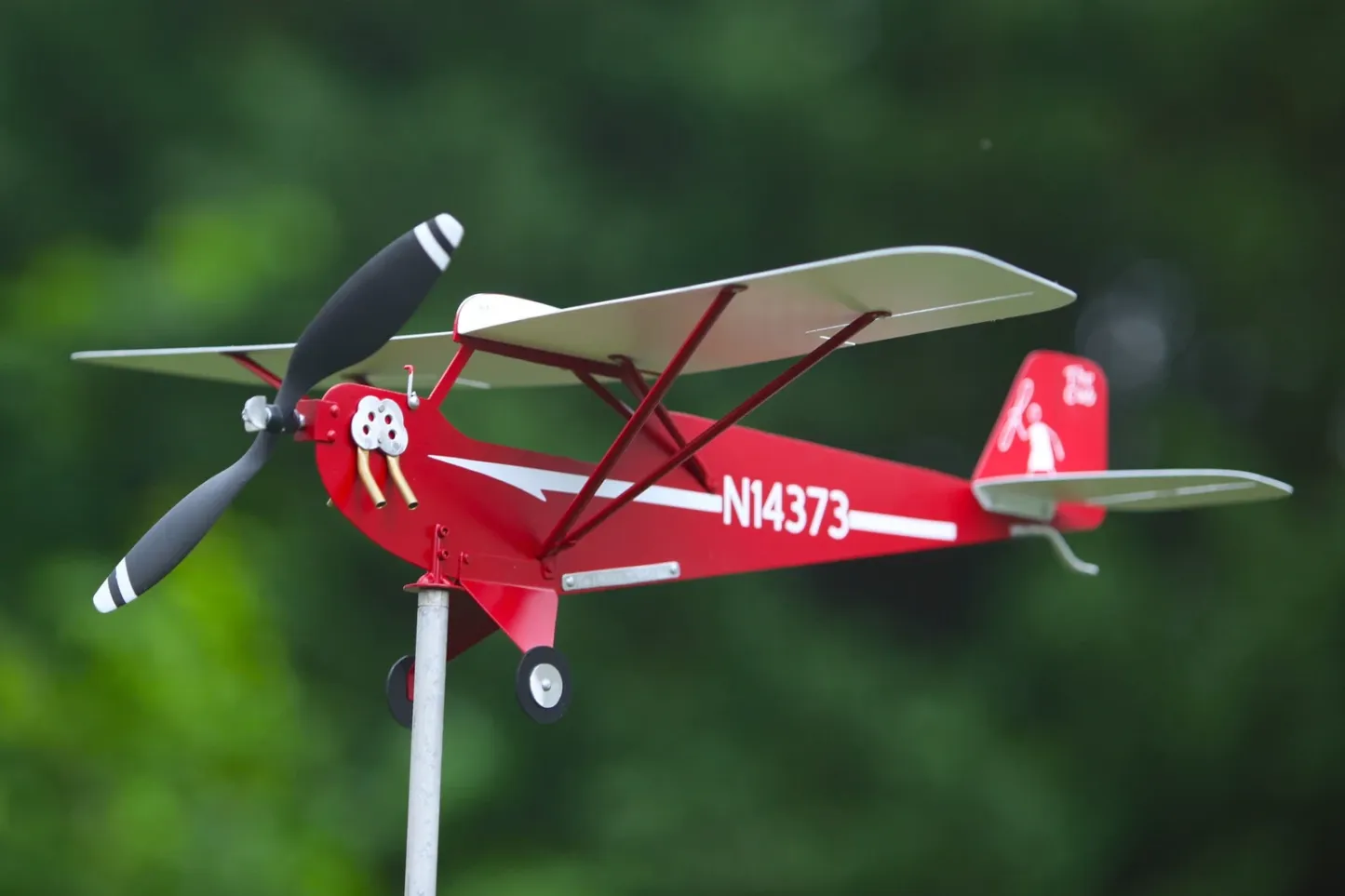
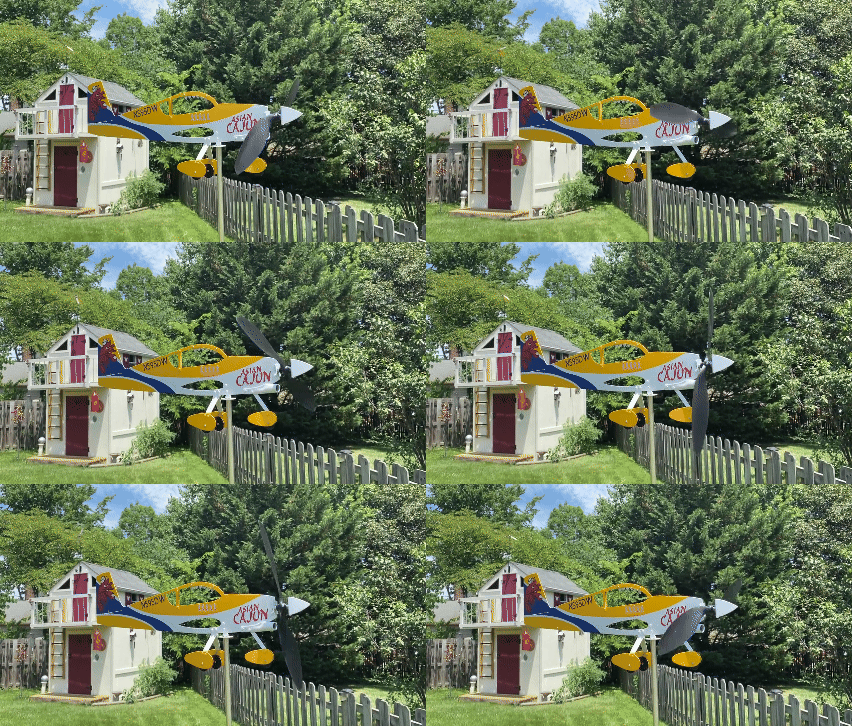
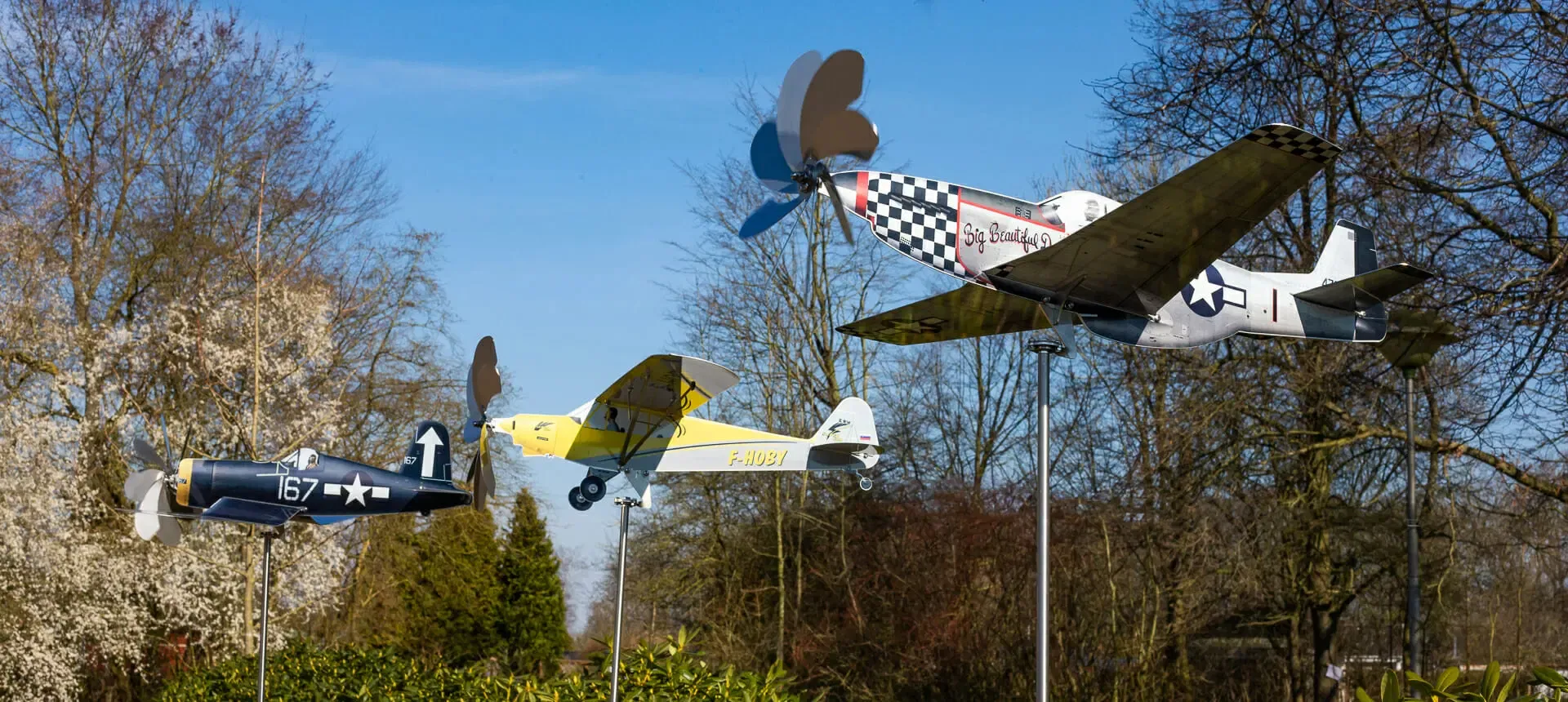
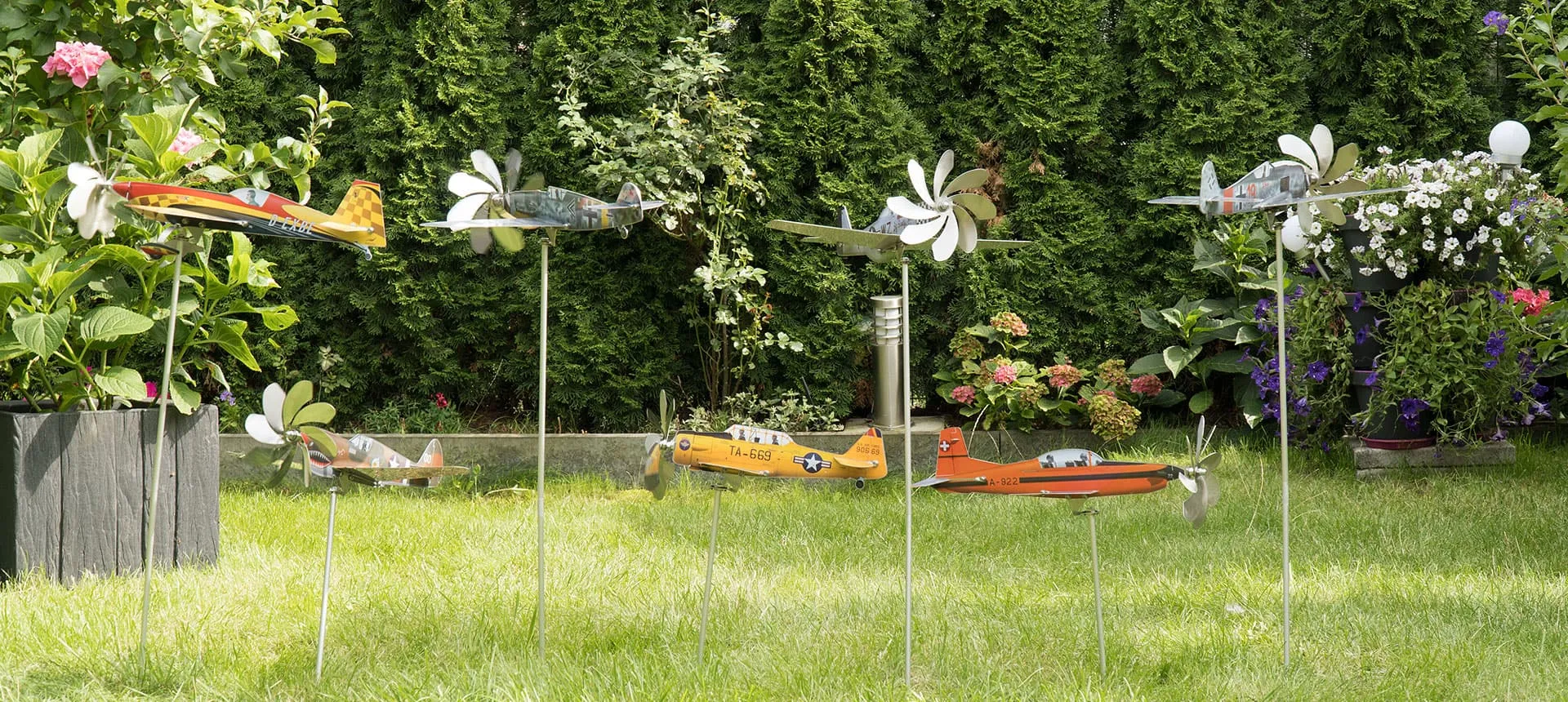
💥 Each airplane model rests elegantly on its slender stand, ready to become the centerpiece of your display. The blurred backdrop of lush greenery adds a touch of natural charm, transporting you to the serenity of a faraway meadow.
✈️ When you see this, I am very grateful, and I hope you will like the airplane that I made myself, because I also just want to give more people access to this power.
Note: To put the windmill into operation, simply drive the support rod into the ground or attach it to the balcony railing with the supplied zip-ties, the wind will do the rest. To obtain maximum performance, it is advisable to position the support as perpendicular as possible to the ground itself, possibly with the aid of a level.
When someone drives by, they’re bound to marvel at this Airplane! That’s really cool!
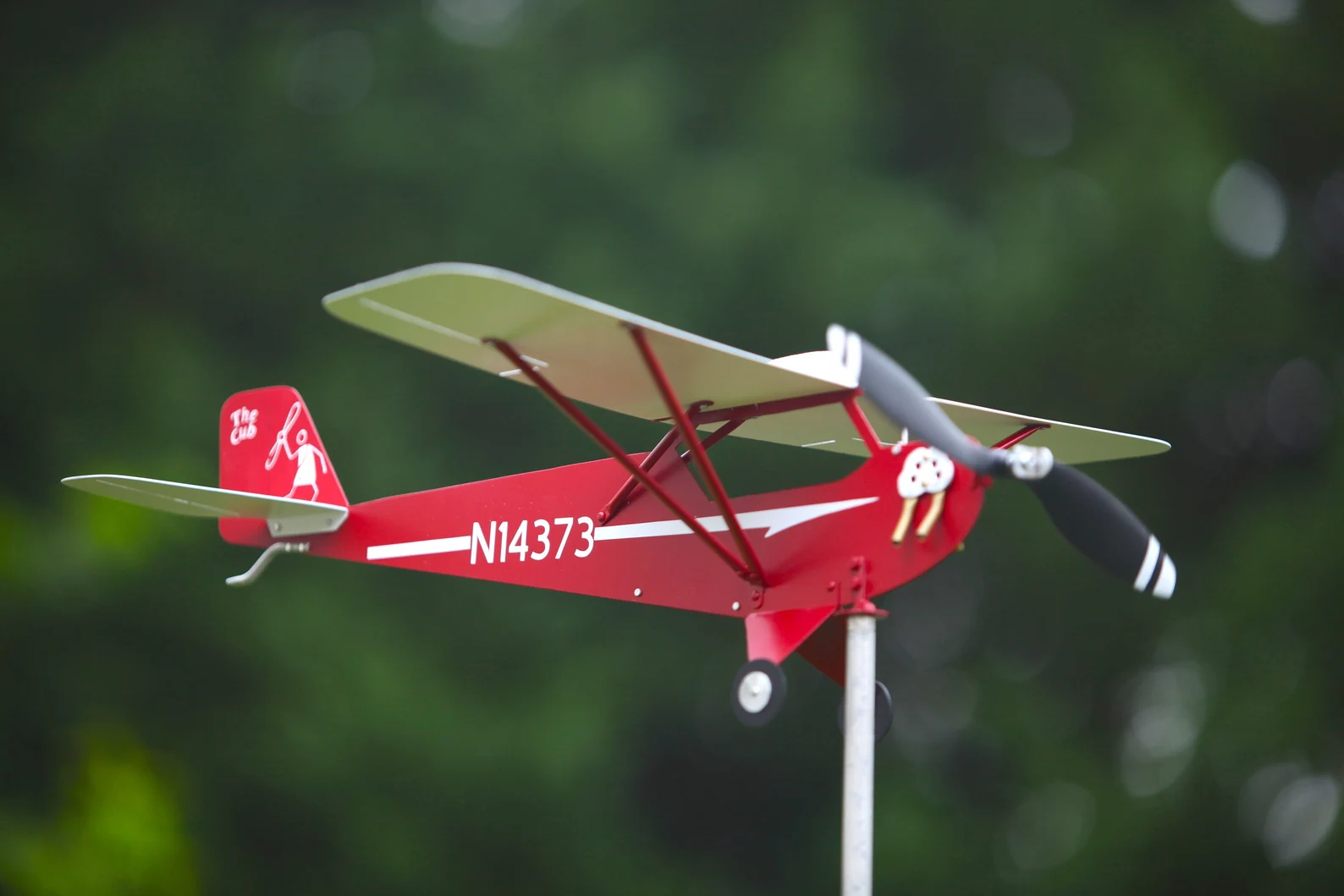
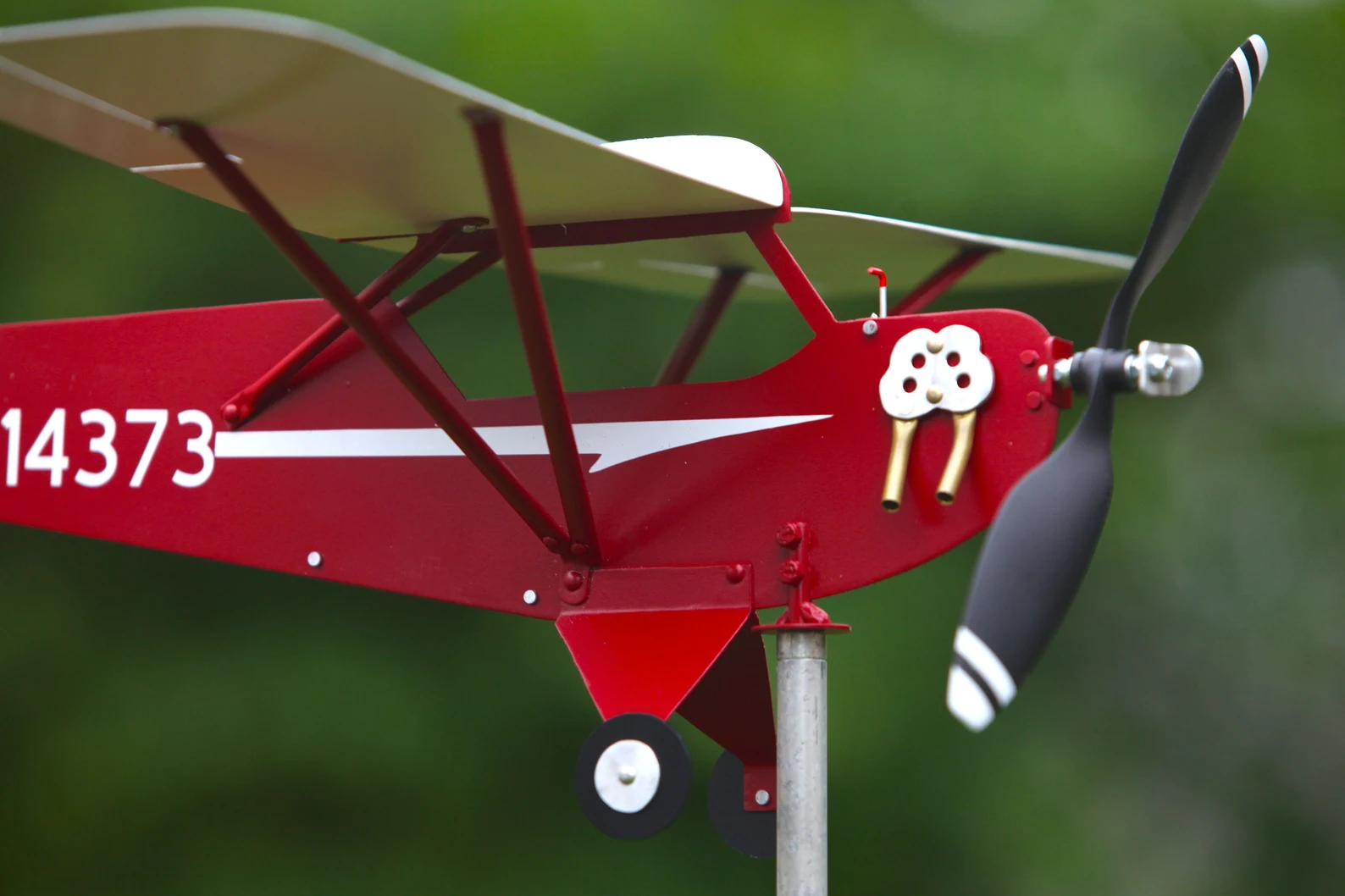
🛬Highlights:
- Handmade.
- Easily installs in less than 1 minute!!
- Size: 40x40x10 cm (16x16x4 inches)
✅ Questions You May Care About!!👇👇
🤔 How well do they hold up in the weather?
❣️ They are very sturdy and can withstand very strong winds, and we have a three year warranty!
🤔 How well does the paint stand up in the sun?
❣️ The paint we use has been rigorously tested under sunlight and is highly resistant to sunlight.
🤔 Will it be difficult to put the airplane together?
❣️ The assembly process is very simple and each wind spinner set comes with detailed instructions and can be assembled in less than 1 minute.
🤔 Where can I buy the poles to install the cute airplanes?
❣️ We will give you the poles for free.
🤔 Is the fan balanced and the bearing sealed?
❣️ Our fans are made of high quality bearings and undergo strict balancing tests during the manufacturing process to ensure that the fan stays stable when rotating at high speeds.

✈WORLDWIDE SHIPPING✈

GREAT REASON TO BUY FROM US